


Learn how to set healthy boundaries to reduce stress, prevent burnout, and improve relationships with these five practical steps.
Setting personal boundaries is a way of taking care of yourself. They give you room to protect your mental health, nurture stronger relationships, and create balance in your daily life. If you’ve ever said yes when you wanted to say no or felt drained because you didn’t know how to end a conversation, you already understand how important boundaries are. These five steps will show you how to set them clearly and keep them in place.
1. Recognize Your Physical and Emotional Warning Signs
Your body and emotions often act like dashboard lights, subtle signals that something isn’t right. They don’t mean you’re broken. They’re reminders that it’s time to pause and set a boundary.
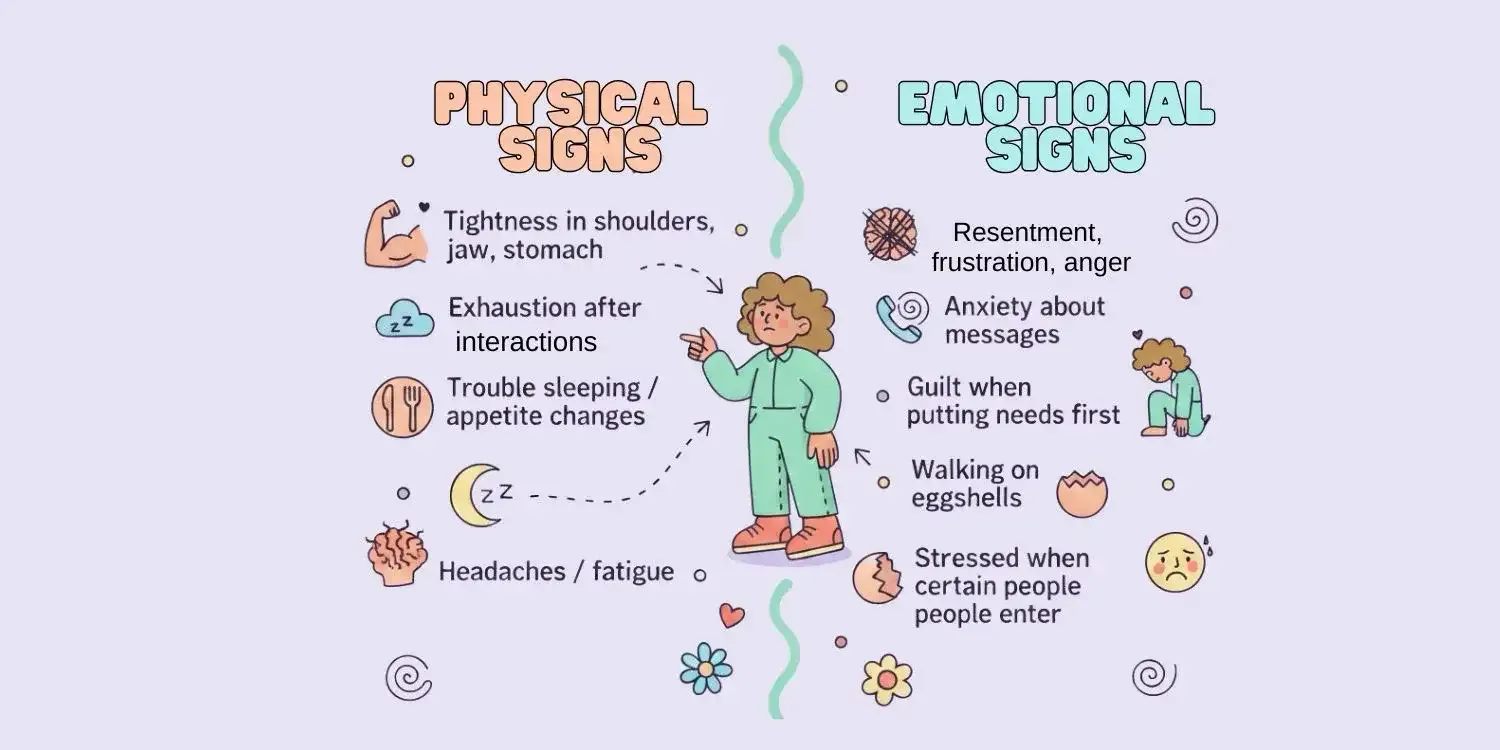
Physical signs may include:
- Tightness in your shoulders, jaw, or stomach
- Exhaustion after certain interactions
- Trouble sleeping or changes in appetite
- Headaches or unexplained fatigue
Emotional signs may include:
- Resentment, frustration, or anger after saying “yes”
- Anxiety about opening messages from certain people
- Guilt when you put your needs first
- Feeling like you’re constantly walking on eggshells
- Feeling stressed when certain people walk in the room
Research from the University of Rochester Medical Center shows that ignoring these signals can increase stress and lead to burnout, and the earlier you recognize them, the easier it is to take action and protect your well-being (URMC, 2023).
Try this exercise: Keep a short “boundary journal” for one week. Each time you notice tension, resentment, or fatigue, jot down the situation and how it made you feel on a scale of 1–10. At the end of the week, look for patterns. These are the areas where new boundaries are most needed.
💡 Quick tip: The next time you feel resentment, pause and ask yourself: “What boundary is missing here?”
2. Identify Your Core Values and Non-Negotiables
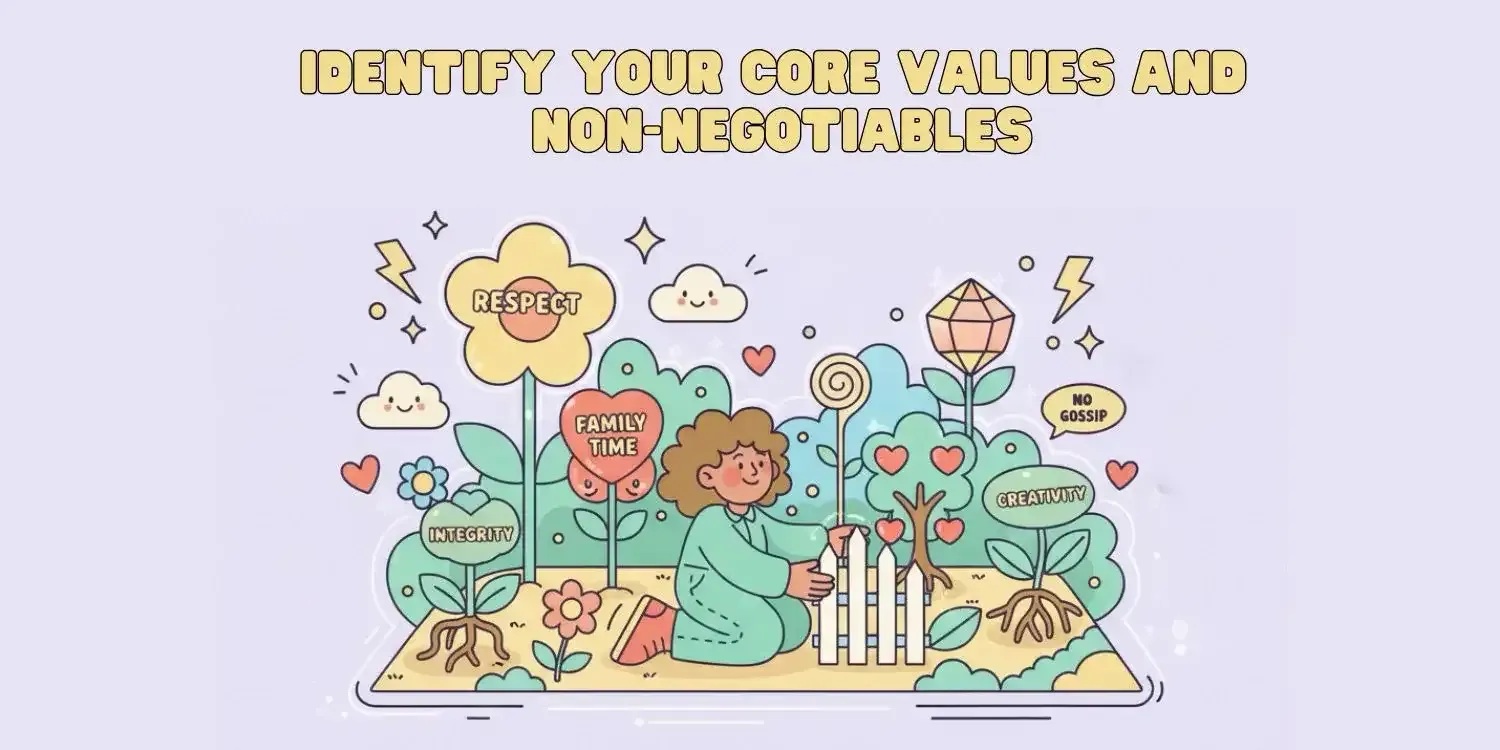
Boundaries grow from your values. When you know what matters most, it’s easier to name and defend the limits that protect your peace.
Questions to reflect on:
- What are your top five values (e.g., honesty, respect, family time, creativity)?
- What behaviors from others feel unacceptable?
- When do you feel most energized and authentic?
- What would you regret not standing up for?
According to Upper East Side Psychology, setting healthy boundaries strengthens self-esteem by helping you prioritize your own needs, communicate them clearly, and feel respected in your relationships (UESP, 2024). When your boundaries reflect your core values, they not only protect your time and energy but also reinforce a sense of integrity and self-worth.
Try this exercise: Write down your top three non-negotiables. For each, create one boundary statement.
Example: “If family time is my value, I won’t take work calls after 7 PM.”
💡 Quick tip: When in doubt, ask: “Does this choice honor my values or compromise them?”
3. Start Small with Low-Stakes Situations
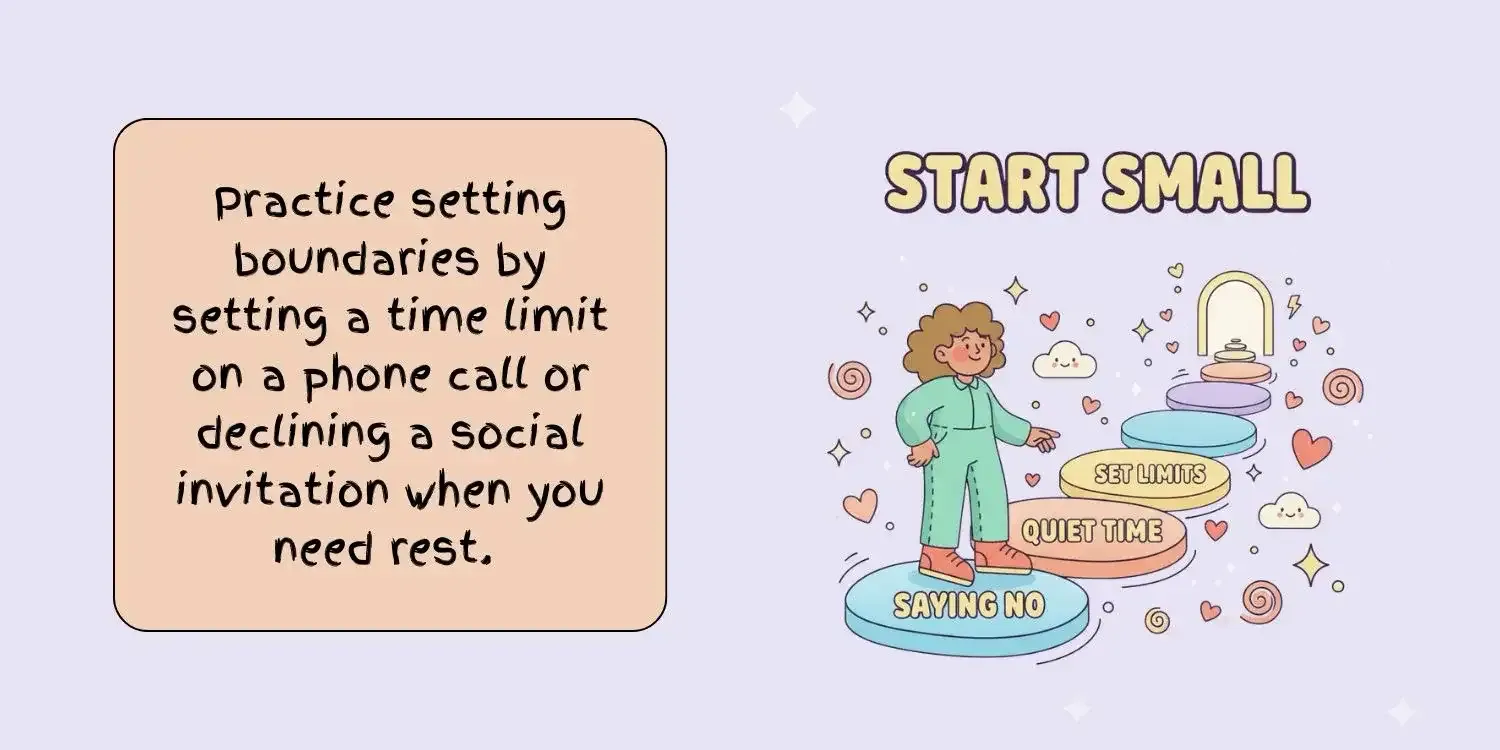
Boundary-setting is a skill, and like any skill, it takes practice. Starting small makes it less intimidating and builds confidence.
Practice scenarios:
- Declining a social invitation when you need rest
- Setting a time limit on a phone call
- Asking for a few minutes of quiet to process emotions
- Saying no to extra tasks when your plate is full
Think of small boundaries as training reps at the gym. Each repetition builds strength so you’re ready for heavier lifts later, like addressing complex family or relationship dynamics.
Try this exercise: Pick one low-stakes scenario this week and practice saying no. Notice how it feels to protect your time and energy, even in small ways.
💡 Quick tip: Small wins add up. Each boundary you honor is worth celebrating. Write it down and mark it with a smile or a checkmark as a simple way to recognize your growth.
4. Use Clear, Direct Communication
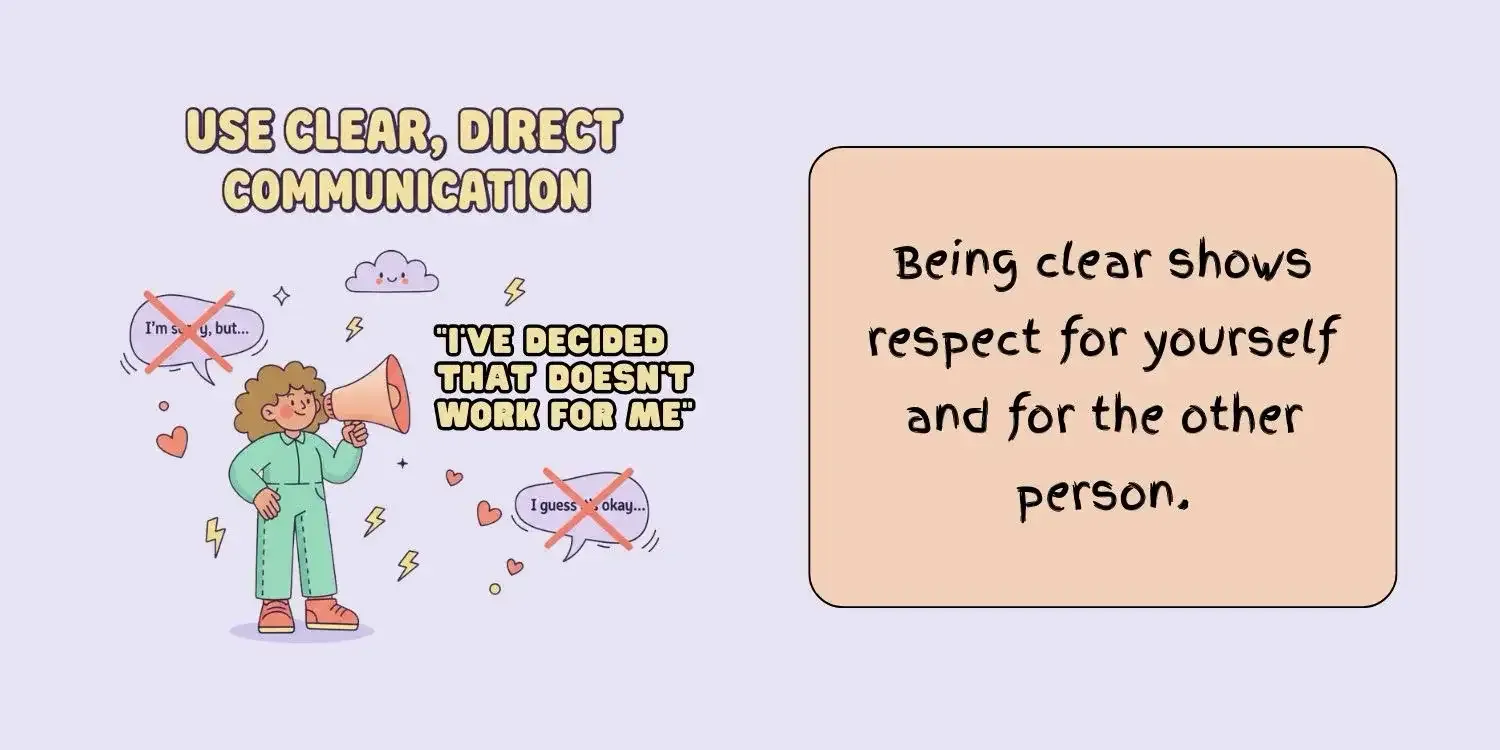
Naming boundaries means little if you can’t express them. Clear, simple language works best. Avoid over-explaining, apologizing, or softening what you need.
Instead of: “I’m sorry, but I don’t think I can help you move this weekend. I’m really tired and have a lot going on.”
Try: “I won’t be able to help with your move this weekend. I hope you find the support you need.”
Boundary language templates:
- “I’m not comfortable with…”
- “I need…”
- “I won’t be able to…”
- “That doesn’t work for me.”
- “I’ve decided to…”
Research shows that “I” statements reduce defensiveness and make it more likely that your message will be heard. Being clear shows respect for yourself and for the other person.
Try this exercise: Write three boundary scripts and keep them in your notes app. Having them ready makes it easier to use them in the moment.
💡 Quick tip: Keep it short. A calm, one-sentence boundary is harder to argue with than a long explanation.
5. Create Boundaries Around Your Time and Energy
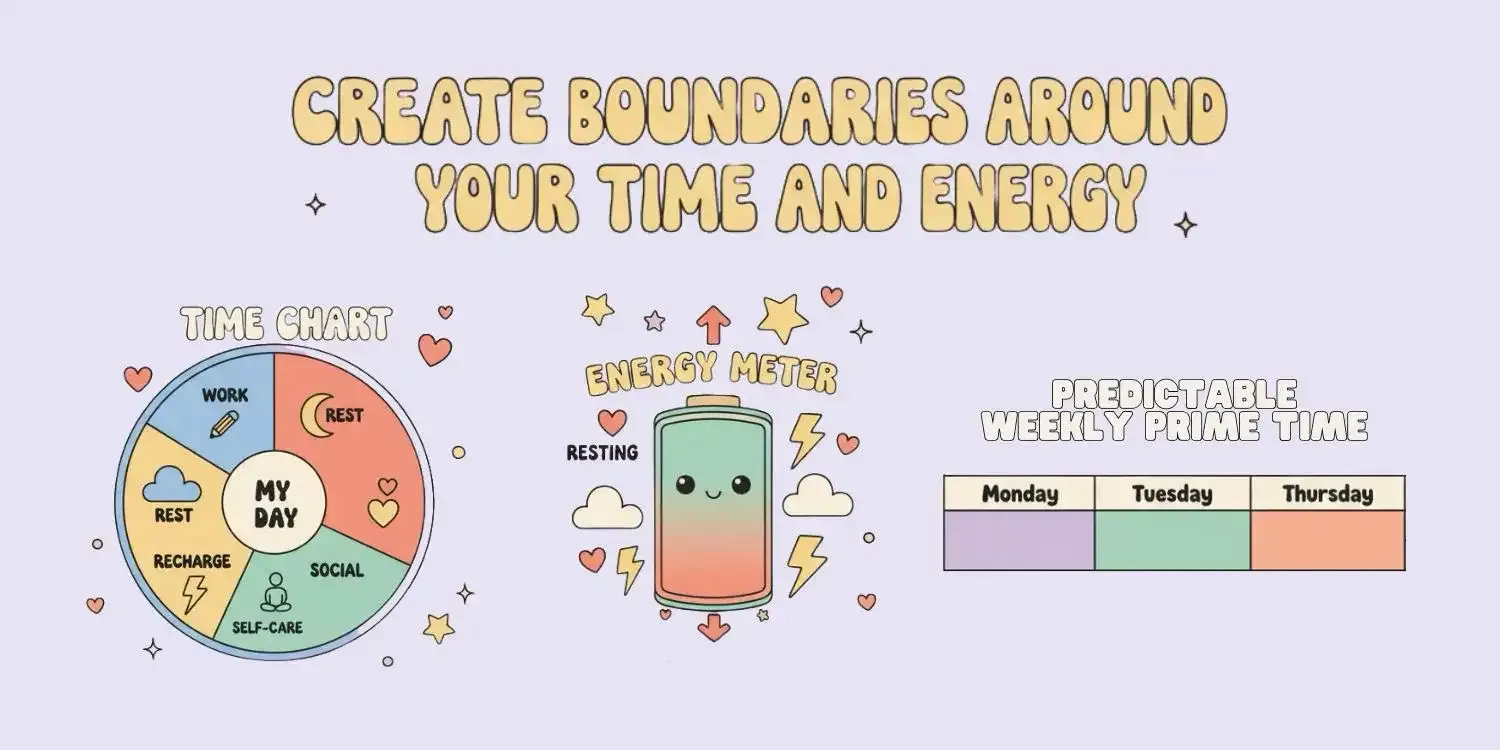
Time and energy are limited resources, yet they’re often the first we give away. Protecting them is key to staying balanced.
Time boundaries may include:
- Designated work hours (and sticking to them)
- Device-free meals or evening
- Non-negotiable self-care time
- Advance notice for social plans
Energy boundaries may include:
- Limiting exposure to negative media or people
- Taking breaks from draining conversations
- Protecting your morning routine
- Saying no to commitments that leave you depleted
The Mayo Clinic notes that managing energy through boundaries lowers stress and helps prevent burnout (Mayo Clinic, 2022). When you guard your schedule and your energy, you free up space for what matters most.
Try this exercise: Track your energy on a scale of one to ten throughout the week. Notice what drains you and what restores you. Use that awareness to decide where new boundaries are most needed.
💡 Quick tip: Protect your “prime time”—the hours when you feel most alert—and reserve them for your top priorities.
Why Boundaries Matter
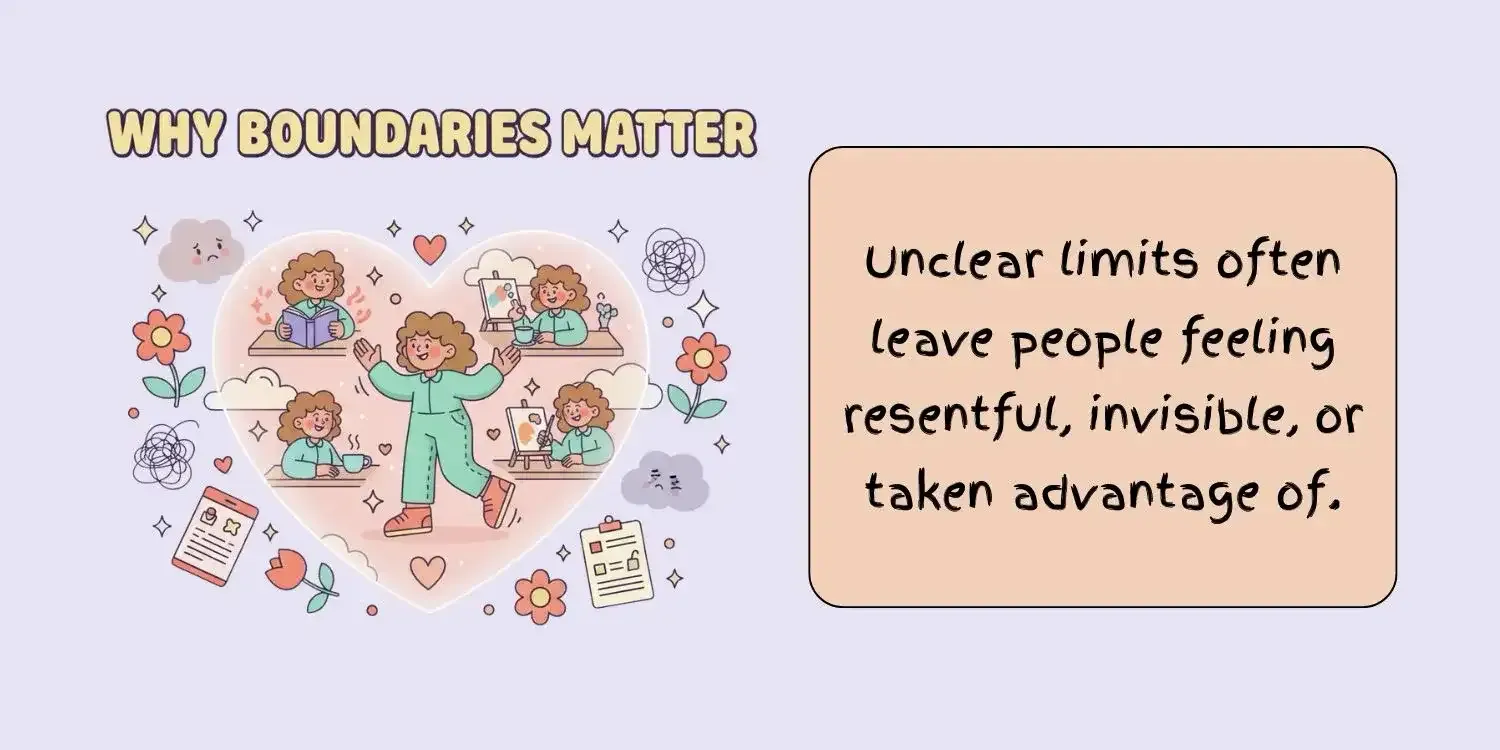
Boundaries aren’t walls to shut people out. They’re maps that show others how to treat you and how to respect your time, energy, and values. Without them, people often make their own rules, and those rules are rarely in your favor.
The University of Rochester’s [Combating Burnout with Boundaries]((https://www.urmc.rochester.edu/behavioral-health-partners/bhp-blog/january-2023/combating-burnout-with-boundaries?) guide notes that unclear limits often leave people feeling resentful, invisible, or taken advantage of. The American Psychiatric Association also emphasizes that setting boundaries protects emotional energy and helps maintain a sustainable pace of life.
Your Next Step
Setting personal boundaries is an ongoing practice, not a one-time event. Start with one area where you feel most depleted or resentful. Use these five steps to name, communicate, and maintain a boundary that protects your well-being.
Expect some pushback; people who were used to having unlimited access to your time or energy may resist. That doesn’t mean your boundary is wrong. Stay calm, repeat it consistently, and back it up with action.
Each limit you set is an act of self-respect. And over time, you’ll notice stronger relationships, less stress, and more energy for what truly matters.
Your future self will thank you for the boundaries you start practicing today.
💡Need a safe space to grow with others on a similar journey?
👉Check out our Spaces Schedule!