

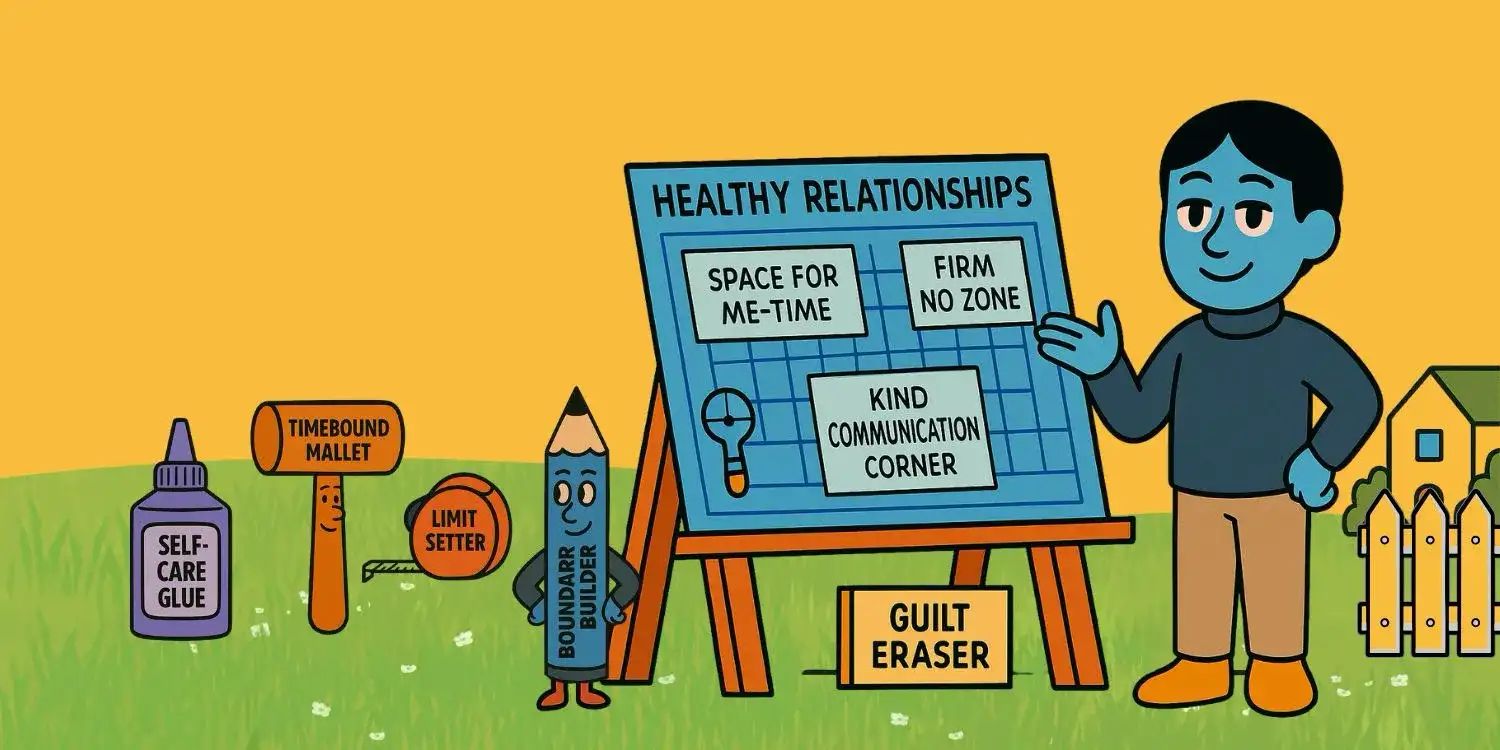
Learn how to communicate boundaries without guilt or apology. Discover proven strategies to set limits clearly, protect your mental health, and build healthier relationships.
Setting boundaries is one of the most important skills for maintaining healthy relationships and protecting your mental well-being. Yet many people struggle with communicating their limits without feeling guilty or apologetic. Learning to express your needs clearly and confidently isn’t selfish—it’s essential for building respect and understanding in all your relationships.
Why Guilt-Free Boundary Communication Matters
Boundaries protect your time, energy, and emotional health. When you communicate them without guilt, you model healthy behavior and teach others how to treat you with respect. Clear boundary communication prevents misunderstandings, reduces resentment, and creates stronger, more authentic relationships.
Many people avoid setting boundaries because they fear being seen as mean, selfish, or difficult. However, boundaries aren’t walls that shut people out—they’re guidelines that help relationships function smoothly and respectfully.
The Foundation: Shifting Your Mindset
Before you can communicate boundaries without guilt, you need to examine your beliefs about boundary setting.
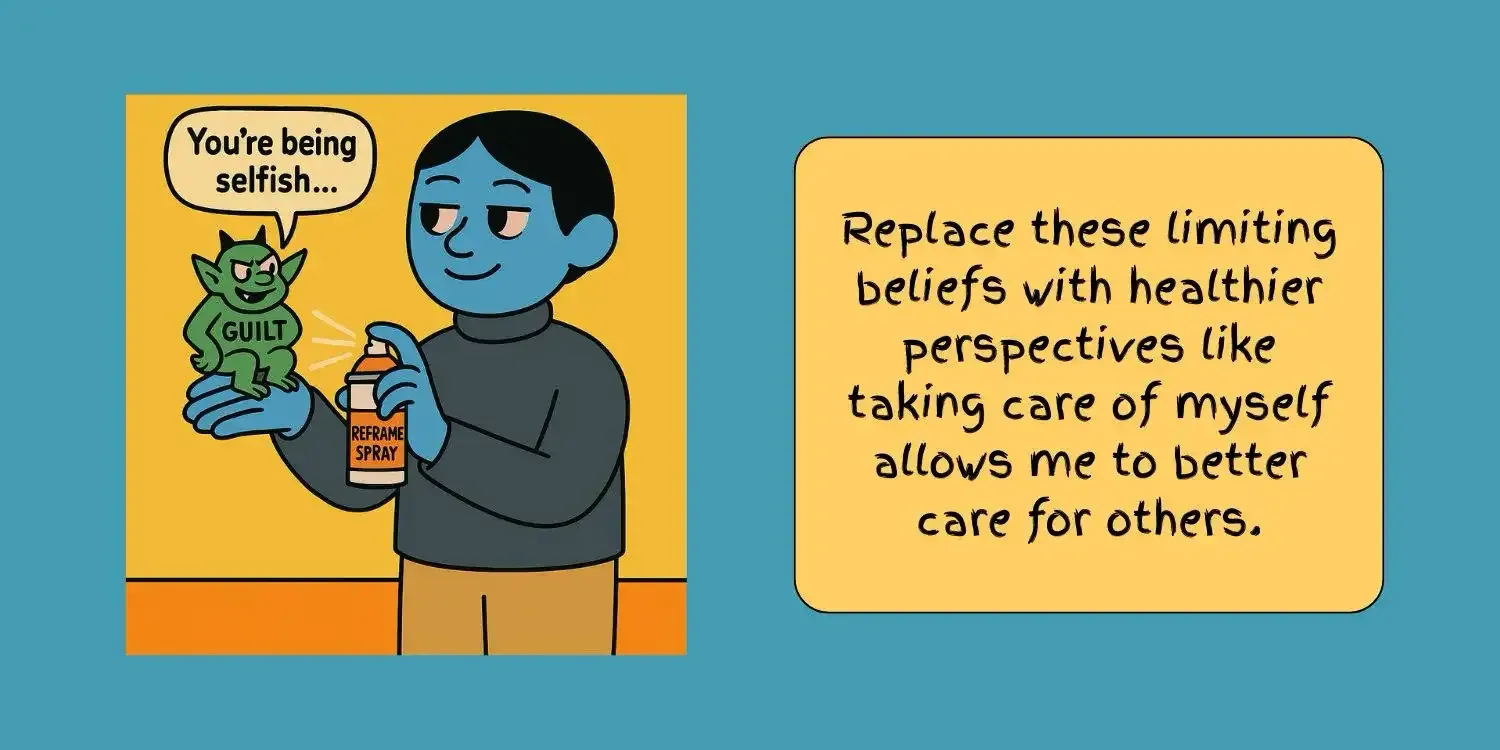
Common guilt-inducing thoughts include:
-
“I should always be available to help others.”
-
“Setting boundaries means I don’t care about people.”
-
“I believe good people don’t say no.”
-
“I’m being selfish if I prioritize my needs.”
Replace these limiting beliefs with healthier perspectives:
-
“Taking care of myself allows me to better care for others.”
-
“Boundaries show that I value both my needs and the relationship.”
-
“Saying no to one thing means saying yes to something more important.”
-
“I know self-care is a responsibility, not selfishness.”
Essential Language Strategies for Boundary Communication
Use “I” statements
Frame boundaries as personal needs rather than criticisms of others. This reduces defensiveness and keeps the focus on your requirements.
Instead of: “You always call too late at night.”
Try: “I need quiet after 11 PM to get proper rest.”
Instead of: “You’re too demanding with money requests.”
Try: “I won’t be able to lend money right now as I’m focusing on my financial goals.”
Be direct and specific
Vague boundaries are ineffective boundaries. Clearly state what you need, when, and what the consequences will be if the boundary isn’t respected.
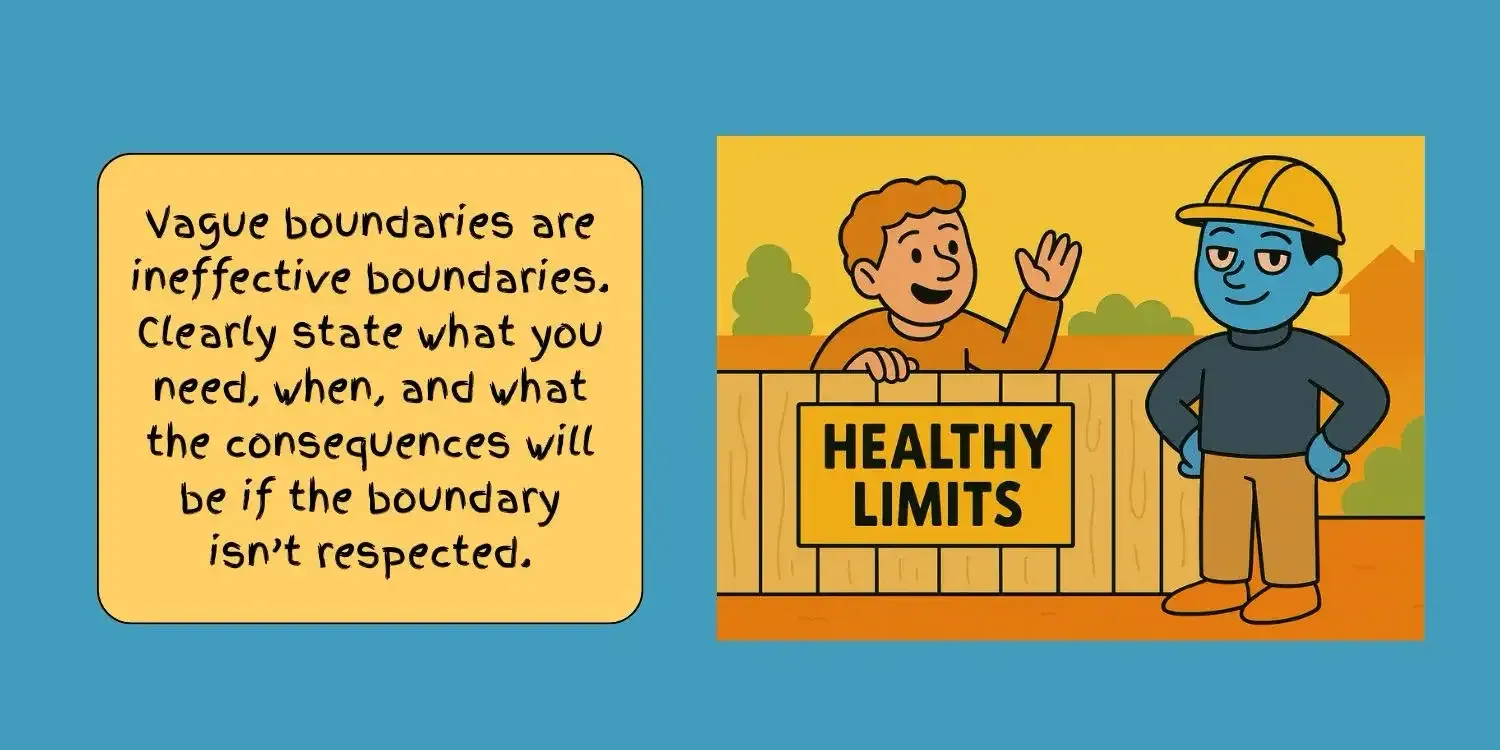
Examples of specific boundaries:
-
“I check work emails only during business hours, Monday through Friday.”
-
“I need 24 hours’ notice before social commitments.”
-
“I don’t discuss my personal relationships at work.”
-
“I require two weeks’ notice for overnight babysitting requests.”
Avoid over-explaining
While it’s natural to want to justify your boundaries, excessive explanations can weaken your message and invite debate. A brief explanation is sufficient.
Over-explaining: “I can’t work overtime tonight because I have this thing with my family, and they’ve been asking me to spend more time with them, and I feel bad because I missed last week’s dinner, and my sister mentioned that...”
Clear and concise: “I can’t work overtime tonight as I have family commitments. I’ll be happy to discuss alternative solutions tomorrow morning.”
Tone and Delivery Techniques
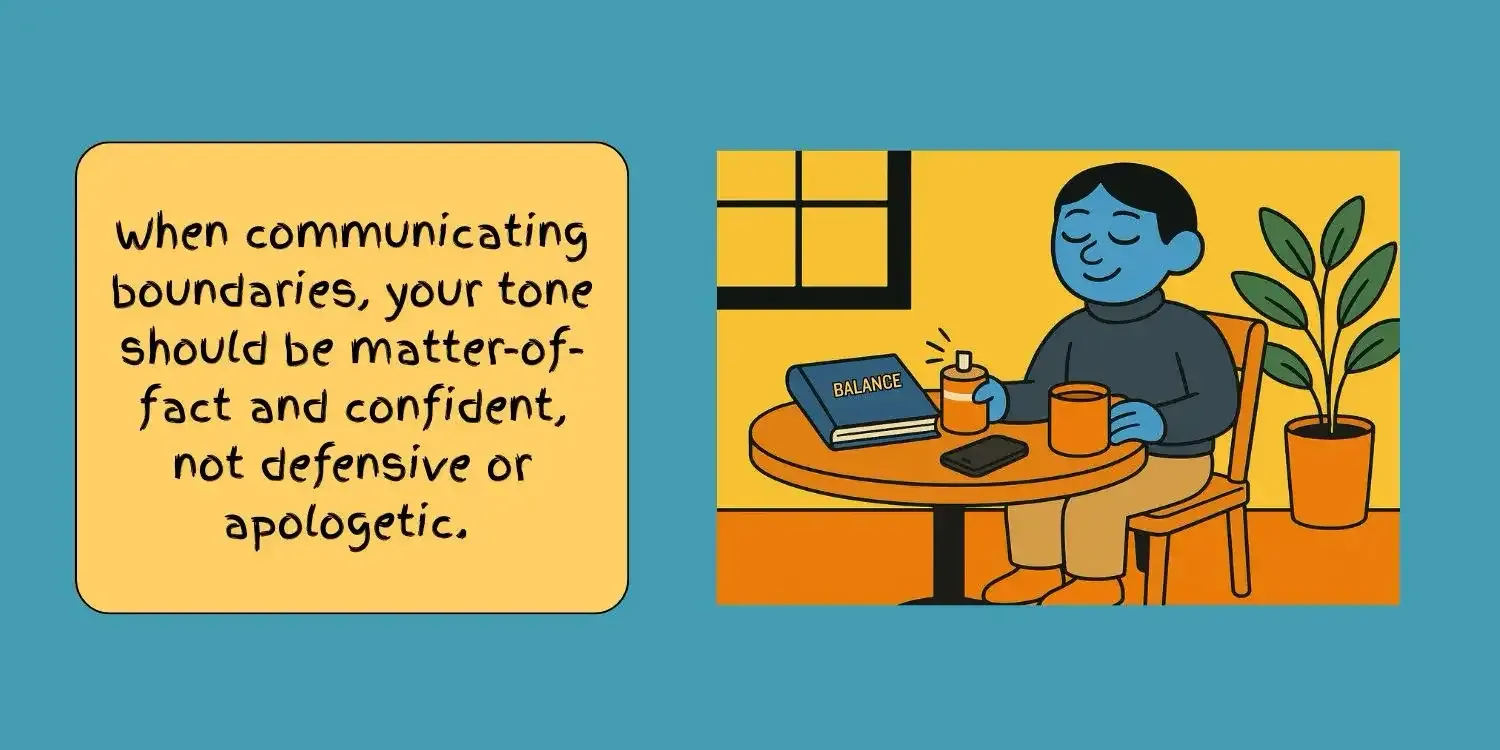
Maintain a calm, steady voice
Your tone should be matter-of-fact and confident, not defensive or apologetic. Practice speaking slowly and clearly when communicating boundaries.
Use confident body language
Stand or sit up straight, make appropriate eye contact, and keep your hands relaxed. Your body language should match your verbal message of confidence and self-assurance.
Stay emotionally neutral
Avoid getting pulled into emotional reactions when setting boundaries. Keep your voice steady and your emotions in check, even if the other person responds negatively.
Practical Scripts for Common Boundary Situations
Time boundaries
Situation: Coworker asking for help during your lunch break
Script: “I use my lunch hour to recharge. I’d be happy to help you first thing tomorrow morning or after 2 PM today.”
Situation: Friend calling repeatedly during work hours
Script: “I can’t take personal calls during work hours. I’m free to chat after 6 PM on weekdays.”
Energy boundaries
Situation: Family member venting constantly about problems
Script: “I care about you, but I’m not in a good headspace to discuss heavy topics right now. Can we schedule time to talk this weekend when I can give you my full attention?”
Situation: Friend expecting immediate responses to texts
Script: “I typically respond to messages within 24 hours. For urgent matters, please call me.”
Financial boundaries
Situation: Relative asking for money frequently
Script: “I’m not able to lend money right now. I’d be happy to help you brainstorm other solutions or resources that might be available.”
Situation: Friends expecting you to pay for expensive group activities
Script: “That’s outside my budget. I’d love to join you for something in the $X range instead.”
Social boundaries
Situation: Declining an invitation without guilt
Script: “Thank you for thinking of me. I won’t be able to make it, but I hope you have a wonderful time.”
Situation: Ending conversations that make you uncomfortable
Script: “I’m not comfortable discussing this topic. Let’s talk about something else.”
Overcoming Common Challenges
Dealing with pushback
When you first start setting boundaries, some people may push back or test your limits. This is normal, and it doesn’t mean your boundaries are wrong. Stay consistent with your message and don’t let guilt manipulate you into changing your position.
Managing your own guilt
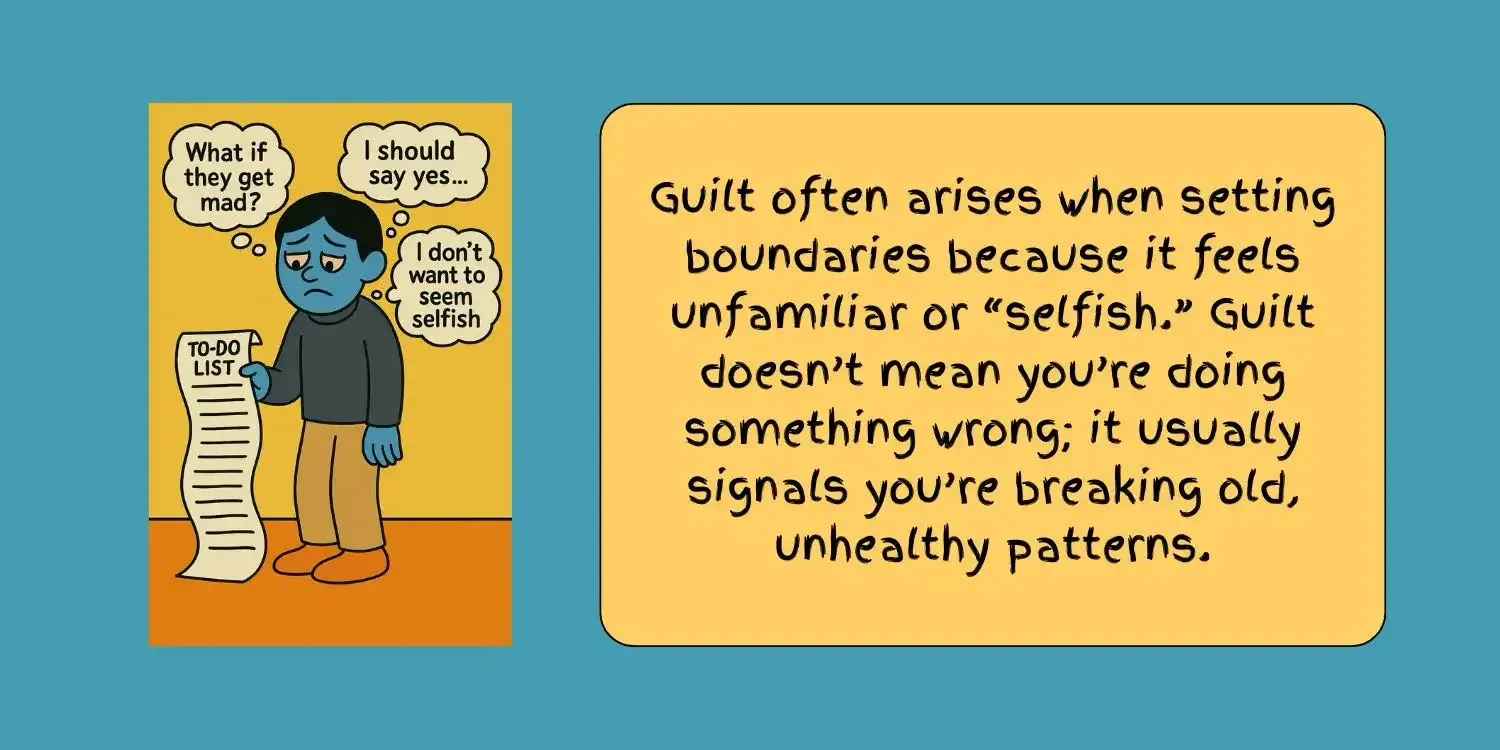
Guilt often arises when setting boundaries because it feels unfamiliar or “selfish.” Guilt doesn’t mean you’re doing something wrong; it usually signals you’re breaking old, unhealthy patterns.
Handling manipulation
Some people may use guilt, anger, or emotional manipulation to get you to drop your boundaries. Recognize these tactics and stay firm. Phrases like “If you really cared about me, you would...” or “You’re being unreasonable” are red flags.
Building Consistency in Your Communication
Start Small
If you’re new to boundary setting, begin with low-stakes scenarios that help you practice expressing your needs calmly and clearly.
Examples:
-
“Letting your roommate know, “I’d appreciate it if we kept the TV lower after 10 PM.”
-
Telling a group chat, “I’m muting notifications for the evening so I can unwind.”
-
Asking your stylist, “Could we skip the small talk today? I’m just in a quiet mood.”
These simple interactions strengthen your confidence and make it easier to hold firmer boundaries later on, when emotions run higher.
Practice Self-Compassion
You won’t always get boundary communication perfect, and that’s perfectly okay. Being kind to yourself as you learn keeps you from slipping into guilt or shame.
Examples:
-
If you agree to something you didn’t want to do, reflect afterward with kindness: “I noticed I felt uncomfortable saying yes — that’s awareness, and it matters.”
-
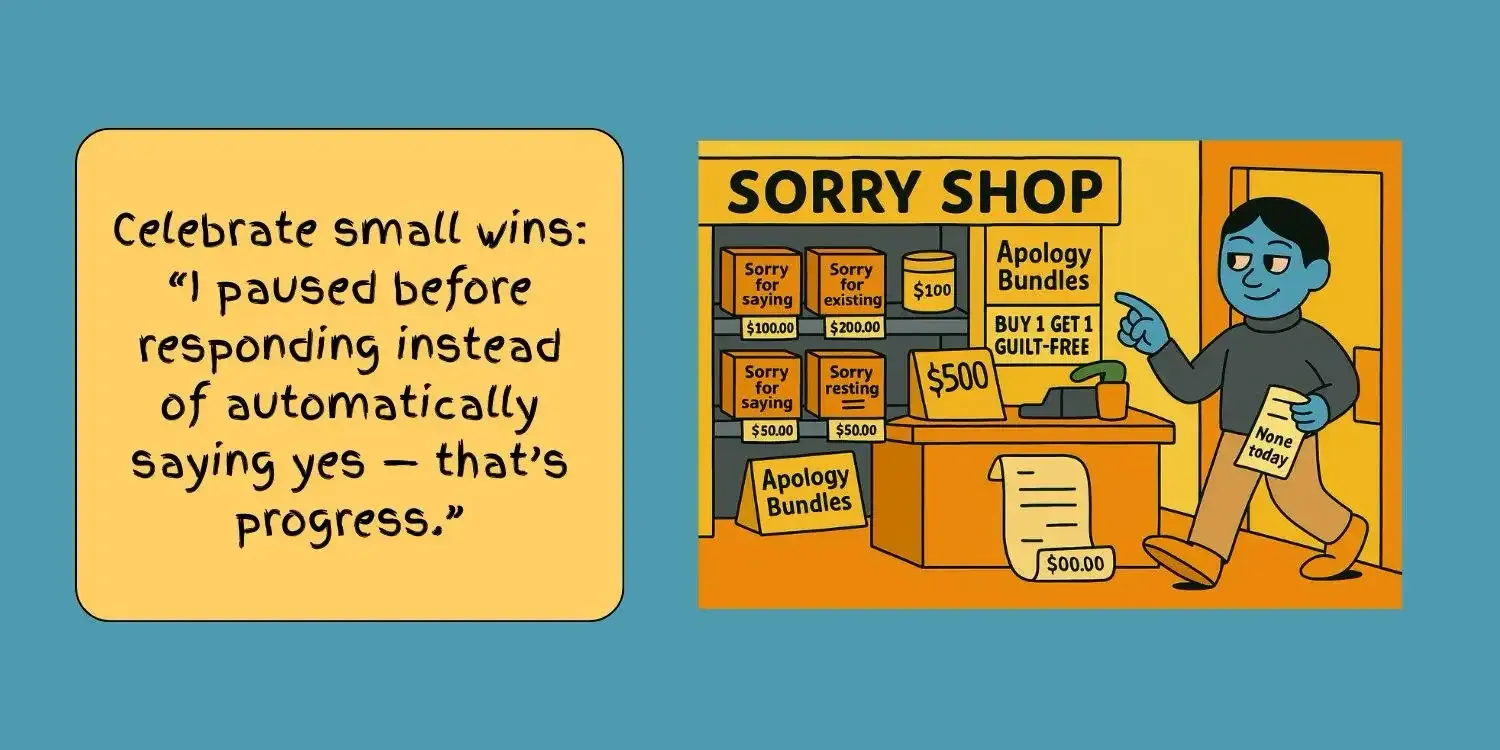
Celebrate small wins: “I paused before responding instead of automatically saying yes — that’s progress.”
-
When guilt shows up, remind yourself: “This feels hard because it’s new, not because it’s wrong.”
Each attempt builds self-trust. Progress isn’t about perfection — it’s about noticing, adjusting, and trying again.
Prepare in Advance
Planning ahead makes boundary conversations smoother and less stressful. When you know what you want to say, you’re less likely to over-explain or second-guess yourself.
Examples:
-
Before a family gathering: “If certain topics come up, I’ll calmly say, ‘Let’s change the subject. I’d rather not go there.’”
-
Before a work meeting: “I’ll practice saying, ‘I don’t have capacity for that project right now, but I can revisit it next quarter.’”
-
Before meeting a friend: “I’ll let them know ahead of time that I need to leave by 9 PM to get enough rest.”
Preparing helps you stay centered and confident. Over time, it turns clear communication into second nature.
The Long-Term Benefits of Guilt-Free Boundary Communication
When you consistently communicate boundaries without guilt, you experience:
-
Reduced stress and anxiety
-
Improved relationships built on mutual respect
-
Increased self-confidence and self-respect
-
Better work-life balance
-
More authentic connections with others
-
Greater emotional and physical energy
Setting boundaries is about creating healthy frameworks for your relationships, not about building walls. Clear, confident communication protects both your well-being and the quality of your connections with others.
By practicing these techniques and maintaining consistency, you’ll develop the ability to communicate your needs without guilt, creating space for healthier, more respectful relationships in all areas of your life.
💡Interested in learning about how others' communicate their boundaries?
👉Join one of our Self-Sabotage Spaces!