

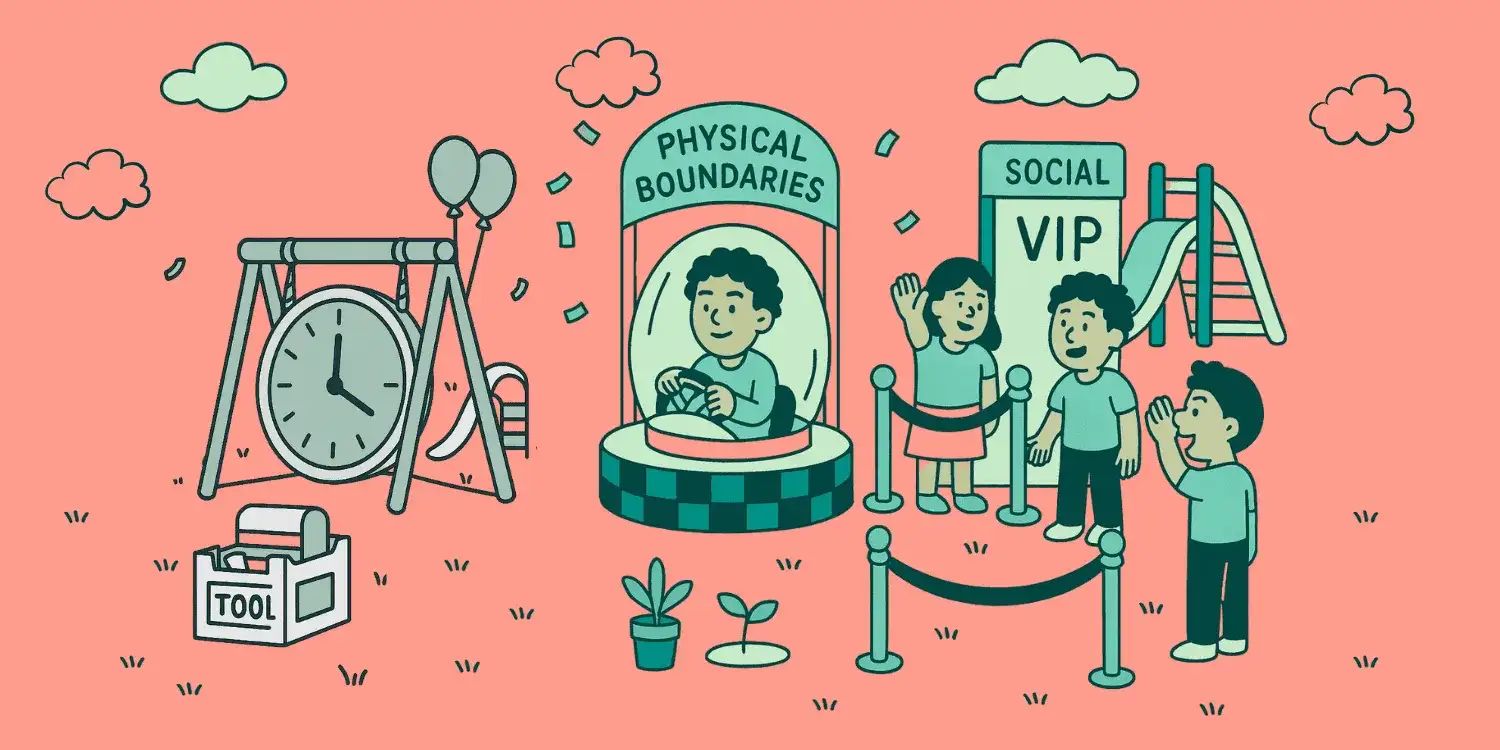
Setting healthy boundaries is one of the most important skills you can develop for your mental health, relationships, and overall well-being. Yet many people struggle with knowing what boundaries to set, how to communicate them effectively, and why they matter so much.
If you’ve ever felt overwhelmed, taken advantage of, or emotionally drained by others, you likely need stronger boundaries. This guide will show you exactly what healthy boundaries look like and how to implement them in every area of your life.
What Are Healthy Boundaries?
Healthy boundaries are the limits you set to show others how to treat you with respect. They protect your time, energy, space, and values while supporting healthier relationships.
Boundaries are like invisible fences. They protect your well-being and help you stay true to yourself. They’re not walls that shut people out, but guides that show others how you want to be treated.
The 10 Types of Boundaries and How to Set Them
1. Time Boundaries: Protecting Your Most Valuable Resource
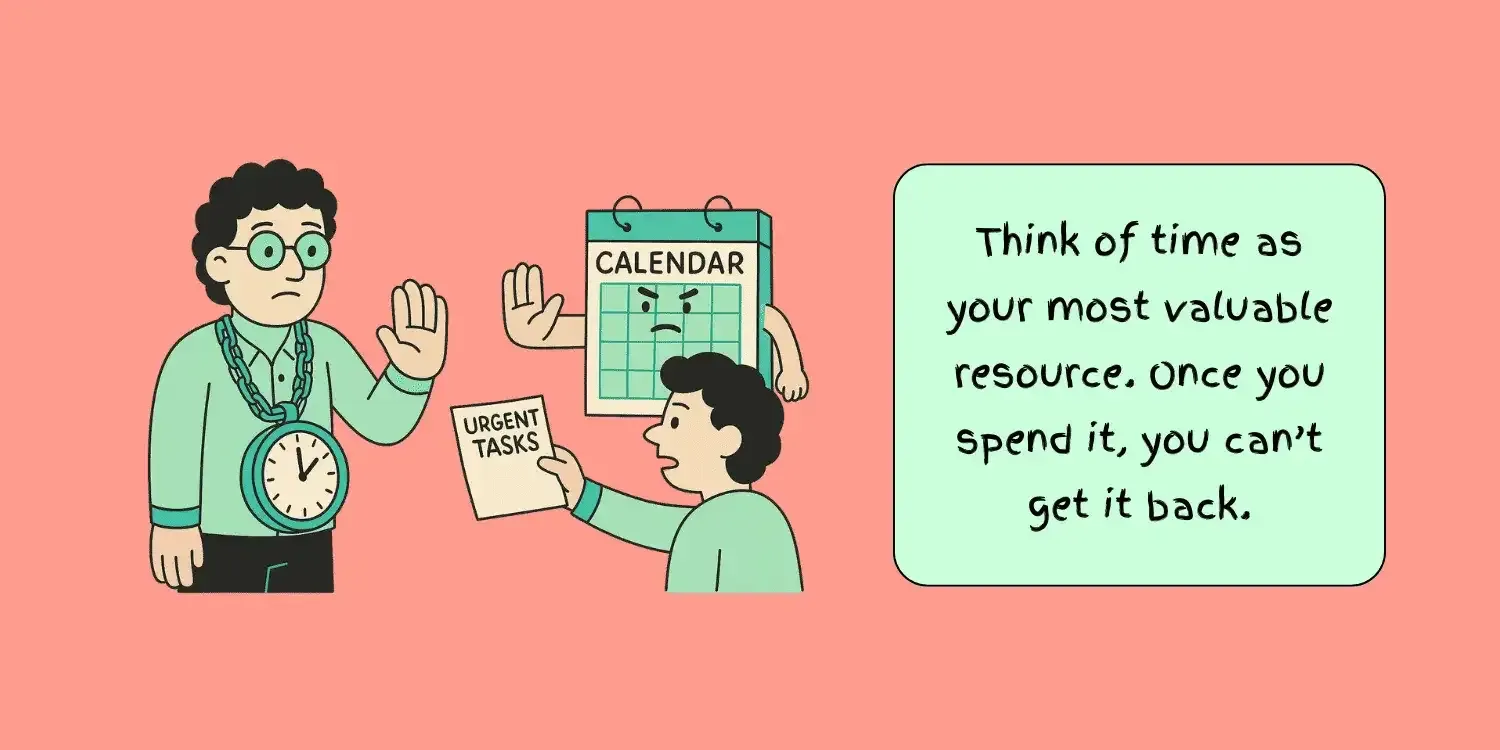
Time boundaries protect your schedule, energy, and priorities. By setting clear limits on work, commitments, and personal time, you prevent burnout and keep life in balance.
👉 Think of time as your most valuable currency; once it’s spent, you can’t get it back.
Examples of Time Boundaries
- Setting specific work hours and sticking to them
- Saying no to last-minute requests that derail your plans
- Blocking off personal time on your calendar as non-negotiable
Scripts for Setting Time Boundaries
- At work: “I’m available to help with this tomorrow during work hours, but I won’t be able to get to it tonight.”
- With friends: “I’d love to hang out, but I need at least a day’s notice for plans.”
- For yourself: “I’m protecting my mornings for exercise and reflection. No phone until 9 AM.”
💡 Quick tip: Start small. Protect one part of your day (like evenings for family or mornings for focus). Once it becomes a habit, expand to other areas.
2. Emotional Boundaries: Safeguarding Your Mental Health
Emotional boundaries protect your mental health by helping you recognize where your feelings end and another person’s begin. They keep you from taking on stress, guilt, or anger that doesn’t belong to you.
👉 Think of emotional boundaries as an invisible filter that lets empathy in but keeps overwhelm out.
Examples of Emotional Boundaries
- Listening empathetically without solving every problem
- Deflecting guilt trips or manipulative comments instead of absorbing them
- Limiting time around people who constantly bring negativity
Scripts for Emotional Boundaries
- When someone vents: “I hear how hard this is for you. I trust you’ll find the right way forward.”
- When pressured by guilt: “I understand you’re disappointed, but I can’t take that on.”
- When needing space: “I need some time to process my own feelings before I can support you.”
💡 Quick tip: A simple phrase like “That sounds hard” shows support without pulling you into problem-solving.
3. Physical Boundaries: Respecting Personal Space
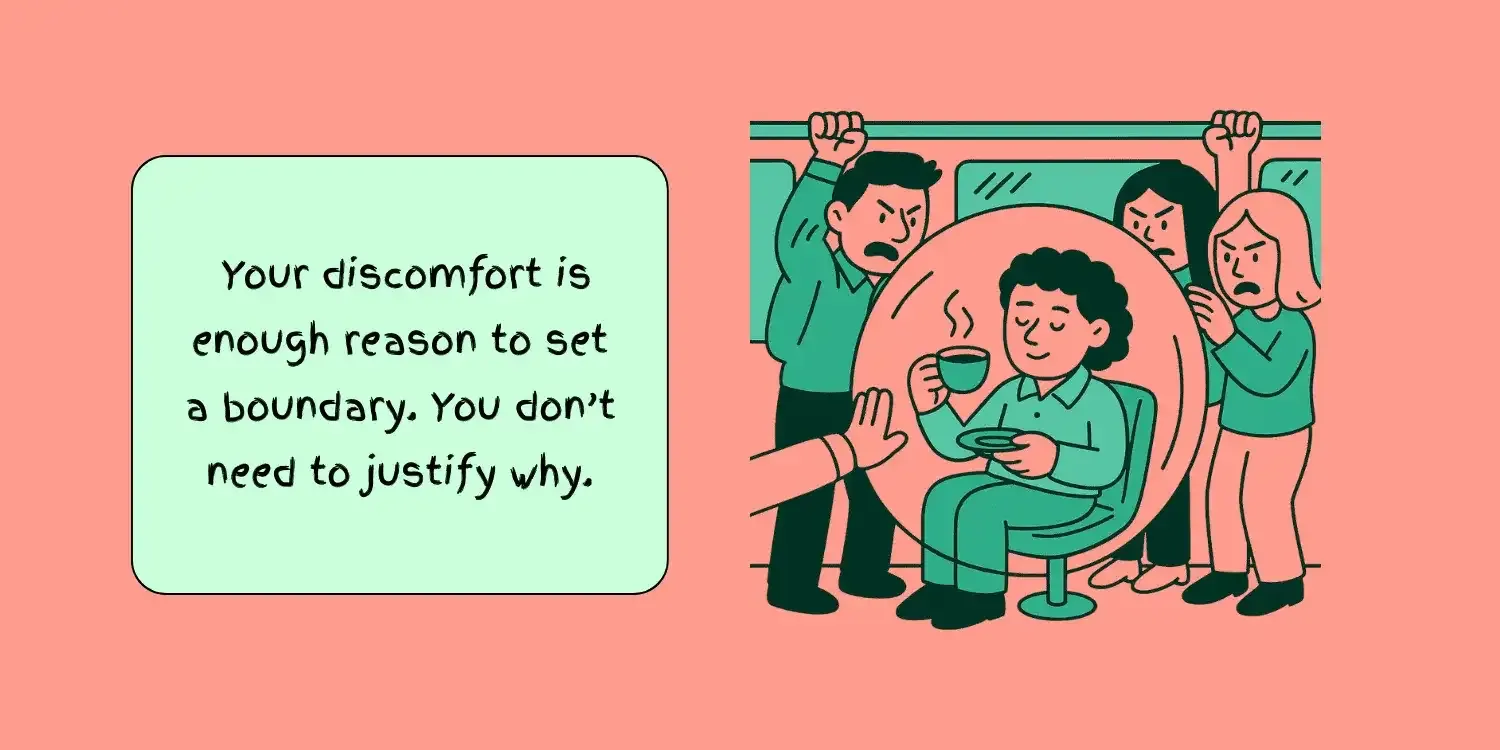
Physical boundaries define your comfort with touch, space, and environment. They protect your safety and well-being while ensuring others respect your personal space.
👉 Think of physical boundaries as the front door to your body and space. You decide who gets invited in.
Examples of Physical Boundaries
- Communicating your preferences around touch
- Asking others to knock before entering your room or office
- Choosing not to share a bed or personal space when you need rest
Scripts for Physical Boundaries
- At work: “I prefer a handshake instead of a hug.”
- At home: “Please knock before entering my room.”
- In public: “I need a little more space, thank you.”
💡 Quick tip: Your discomfort is enough reason to set a boundary. You don’t need to justify why.
4. Digital Boundaries: Managing Technology’s Impact
Digital boundaries regulate how and when you use technology. They protect your focus, reduce screen time stress, and help you stay present in real-world relationships.
👉 Think of digital boundaries as a curfew for your devices. Clear stop and start times help you rest and recharge.
Examples of Digital Boundaries
- Turning off notifications after work hours
- Setting “Do Not Disturb” windows during focus time
- Establishing phone-free zones (bedroom, dinner table, etc.)
Scripts for Digital Boundaries
- With coworkers: “I disconnect after hours to recharge, but I’ll circle back once I’m online.”
- With friends or family: “Let’s make this a phone-free dinner so we can focus on each other.”
- For yourself: “I’m limiting social media to 30 minutes a day.”
💡 Quick tip: Set one daily “offline window” where devices stay out of reach. Even 30 minutes can reset your focus and mood.
5. Financial Boundaries: Protecting Your Economic Well-Being
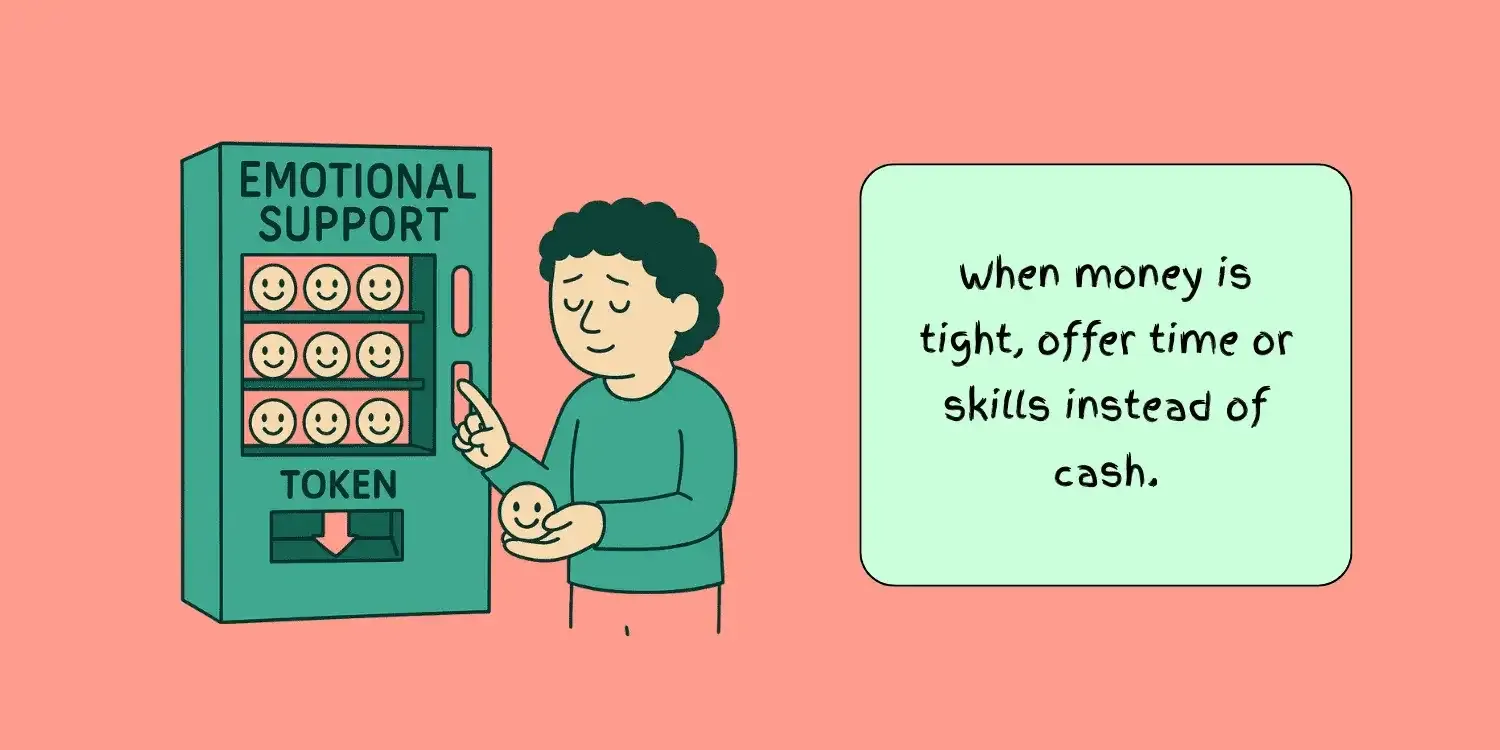
Financial boundaries protect your money, reduce relationship tension, and help you stick to your budget. They allow you to be generous without sacrificing financial stability.
👉 Think of financial boundaries as a filter that lets generosity through but blocks guilt-driven spending.
Examples of Financial Boundaries
- Saying no to requests for money outside your budget
- Keeping personal financial details private
- Sticking to your spending plan despite social pressure
Scripts for Financial Boundaries
- With friends/family: “That’s not in my budget right now.”
- At work: “I can’t contribute to this office pool, but I’ll cheer you on.”
- For yourself: “I have a gift budget, and I won’t exceed it.”
💡 Quick tip: When money is tight, offer time or skills instead of cash.
6. Work Boundaries: Maintaining Professional Balance
Work boundaries separate your professional role from your personal life. They protect your time, prevent burnout, and create a healthier work-life balance.
👉 Think of work boundaries like a thermostat that regulates your workload and keeps it at a healthy temperature instead of overheating into burnout.
Examples of Work Boundaries
- Not checking emails during evenings or vacation
- Declining projects when you’re already at capacity
- Avoiding workplace gossip or negative talk
Scripts for Work Boundaries
- With coworkers: “I don’t have bandwidth right now, but let’s revisit this after my current project wraps up.”
- With your manager: “I’d love to contribute, but I’m at full capacity. Which priority should I adjust to make room?”
- For yourself: “I turn off work notifications after 6:30 PM.”
💡 Quick tip: Protect your time by setting clear start and end points to your workday, and stick to them.
7. Relationship Boundaries: Fostering Healthy Connections
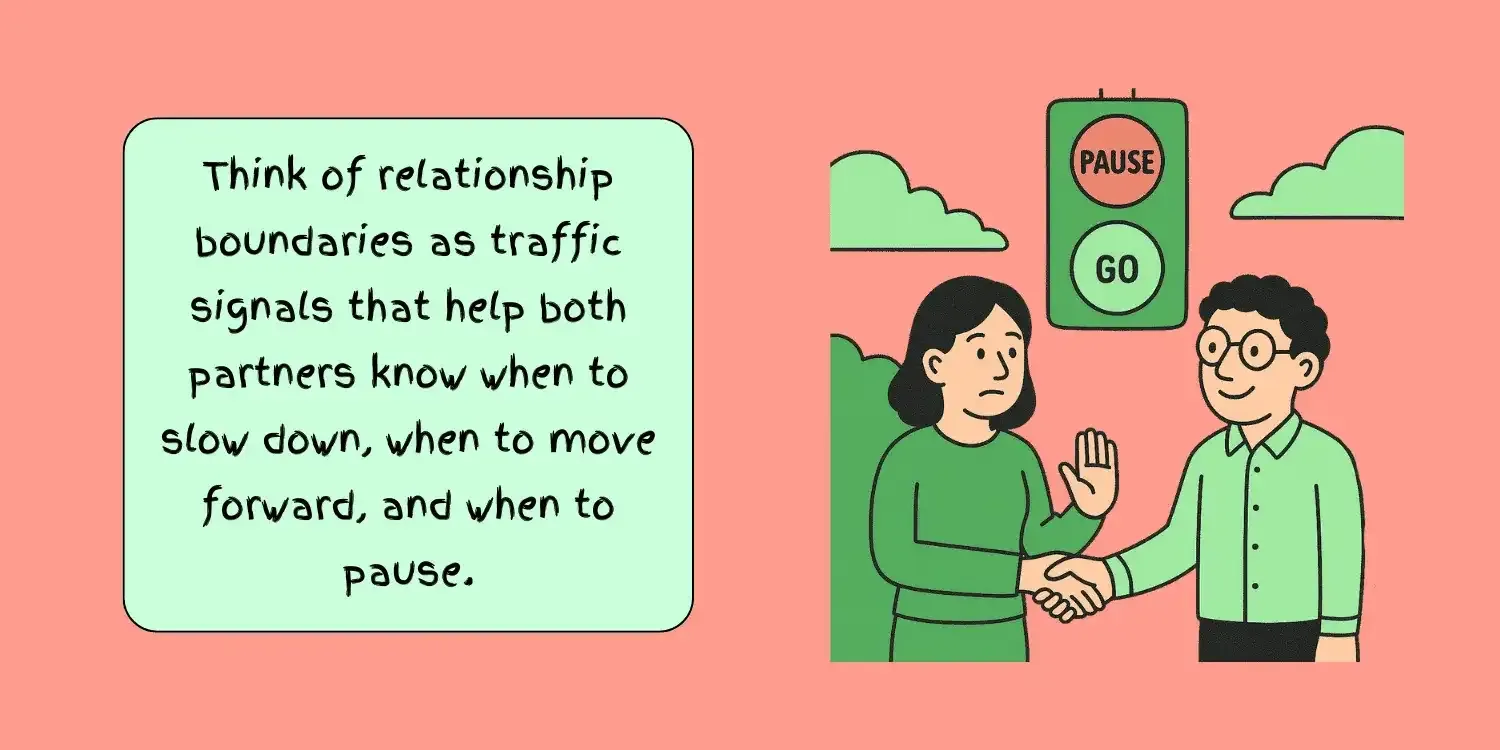
Relationship boundaries create balance, respect, and healthy communication in romantic partnerships and friendships. They protect your individuality while strengthening connection.
👉 Think of relationship boundaries as traffic signals that help both partners know when to slow down, when to move forward, and when to pause.
Examples of Relationship Boundaries
- Communicating your needs clearly
- Not tolerating disrespect or manipulation
- Maintaining personal interests and friendships
Scripts for Relationship Boundaries
- When pressured: “I need some time to think before I give you an answer.”
- When disrespected: “I’m willing to continue this conversation when we can both speak calmly.”
- For yourself: “I’m spending Saturday on my hobbies to recharge.”
💡 Quick tip: Protect intimacy by clearly stating one need this week, whether it’s time alone, a pause in an argument, or space for your hobbies.
8. Family Boundaries: Navigating Complex Dynamics
Family boundaries let you stay independent while maintaining respect within your family system. They reduce conflict, prevent guilt trips, and support healthier dynamics.
👉 Think of family boundaries as the edges of a puzzle piece that allow you to fit together without losing your unique shape.
Examples of Family Boundaries
- Avoiding triggering topics (politics, money, relationships)
- Deciding which family events you’ll attend
- Rejecting guilt-based manipulation
Scripts for Family Boundaries
- When questioned: “I’d rather not discuss that.”
- When guilt-tripped: “I appreciate your concern, but I’ve made my choice.”
- For yourself: “I’ll visit for two hours, then I need to leave to rest.”
💡 Quick tip: Plan your boundaries before family gatherings. Decide what topics you’ll avoid, how long you’ll stay, and what you’ll say if a boundary is crossed. Having a script ready makes it easier to stay calm in the moment.
9. Social Boundaries: Choosing Your Circle Wisely
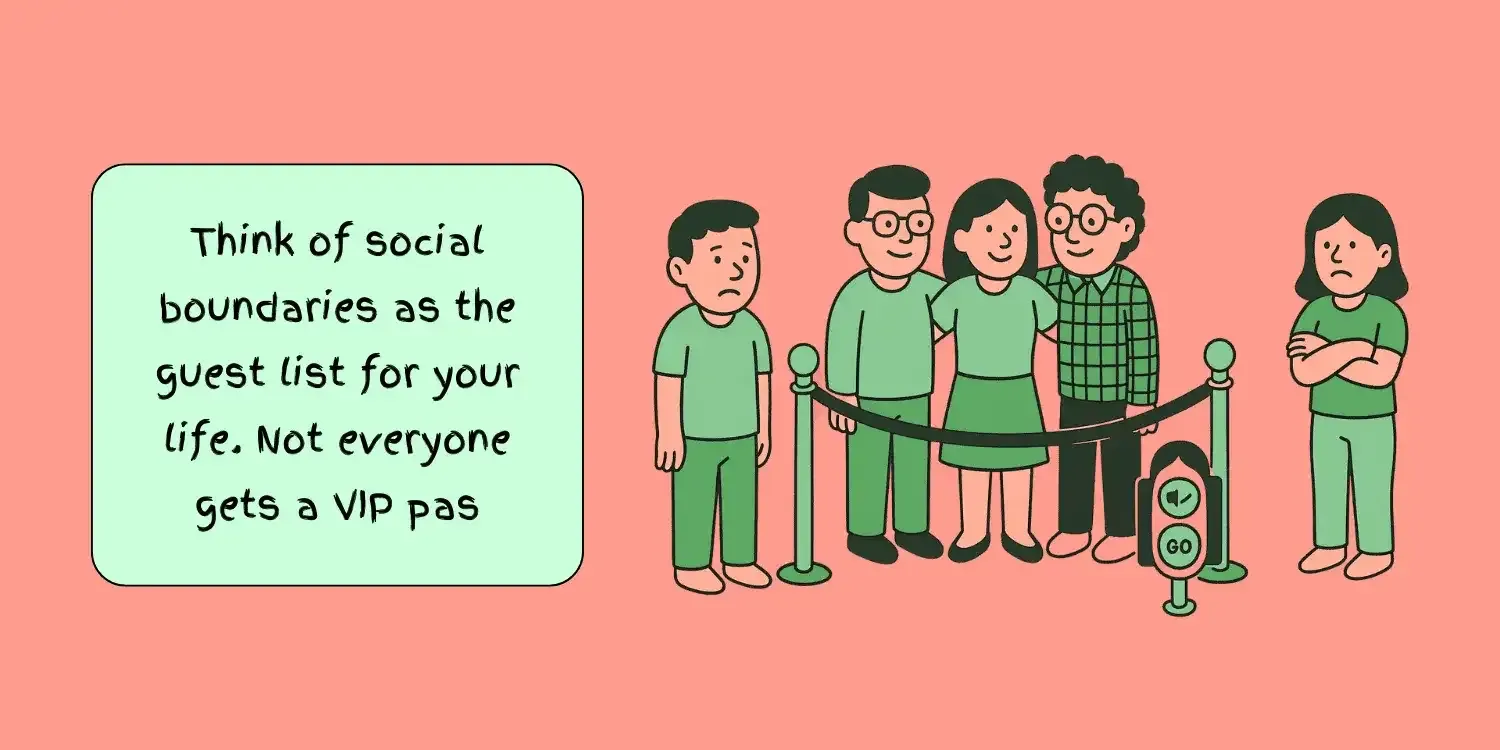
Social boundaries define who you give your time and energy to. They protect you from toxic or draining relationships and help you invest in supportive, uplifting connections.
👉 Think of social boundaries as the guest list for your life. Not everyone gets a VIP pass.
Examples of Social Boundaries
- Saying no to events when you need downtime
- Limiting exposure to toxic or draining people
- Prioritizing friendships that are mutually supportive
Scripts for Social Boundaries
- Declining politely: “Thanks for inviting me! I won’t make it this time, but I hope it’s great.”
- When leaving early: “I’ve had a wonderful time, but I’m heading out now to recharge.”
- For yourself: “I commit to only two social events per week.”
💡 Quick tip: Pay attention to how you feel after spending time with someone. If you walk away exhausted, that’s a sign to adjust the boundary.
10. Personal Values Boundaries: Staying True to Yourself
Values boundaries align your choices with your core beliefs. They protect your authenticity, guide ethical decisions, and prevent you from compromising for approval.
👉 Think of values boundaries as your inner compass guiding you toward choices that feel right, even if others disagree.
Examples of Values Boundaries
- Saying no to actions that conflict with your principles
- Speaking up when situations violate your ethics
- Choosing relationships and work aligned with your values
Scripts for Values Boundaries
- At work: “This project conflicts with my ethics, so I’ll need to step back. Let’s explore other ways I can support.”
- In social life: “That suggestion doesn’t sit right with me, so I’ll pass.”
- For yourself: “I’m going to pause before committing so I can make sure this aligns with what matters most to me.”
💡 Quick tip: Write down your top three non-negotiable values. If a decision conflicts with them, that’s your cue to set a boundary.
Why Healthy Boundaries Matter
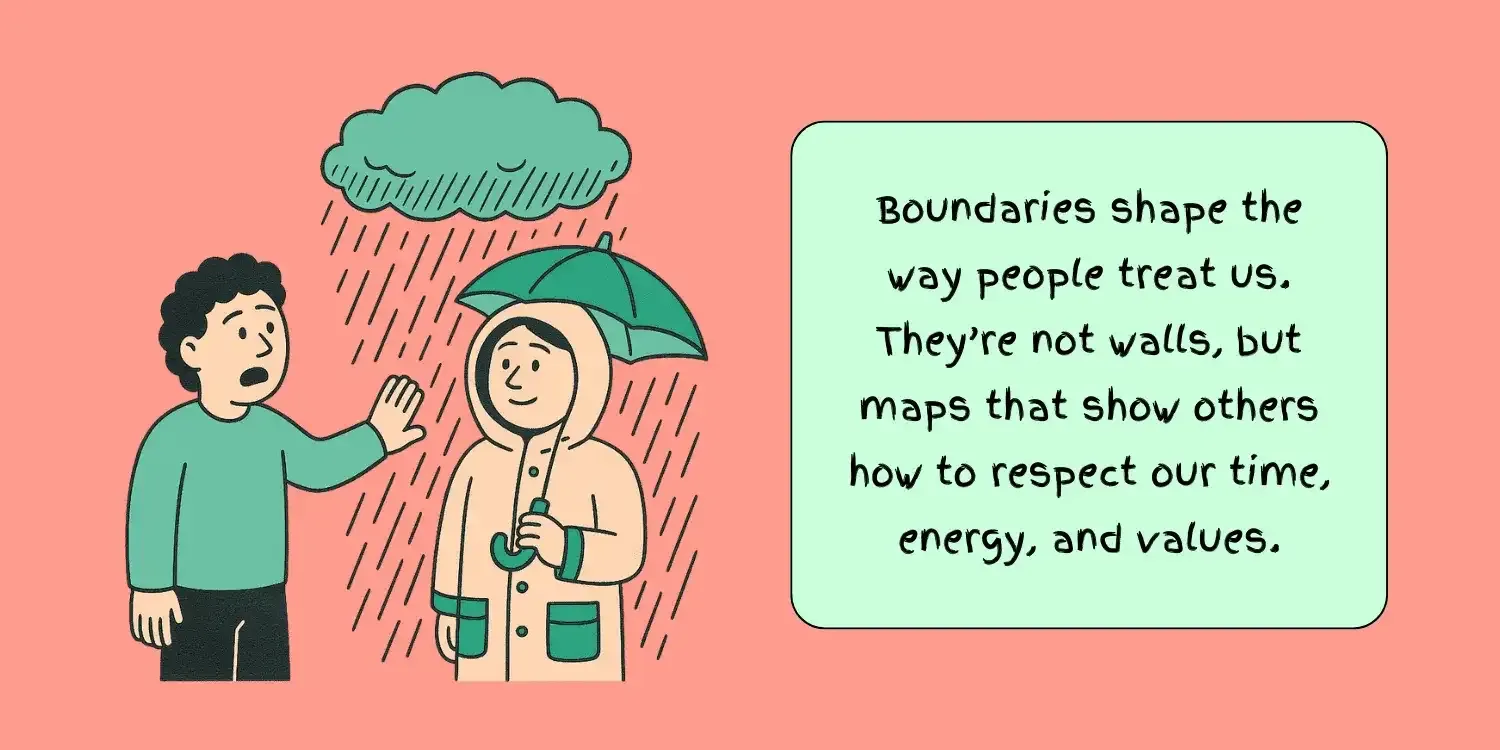
Boundaries shape the way people treat us. They’re not walls, but maps that show others how to respect our time, energy, and values. Without them, people often make their own rules, usually not in our favor.
The University of Rochester’s Combating Burnout with Boundaries guide notes that when limits aren’t set or communicated clearly, people frequently end up feeling taken advantage of, resentful, or invisible (urmc.rochester.edu). The American Psychiatric Association adds that boundaries are a key tool for preventing burnout because they protect emotional energy and help maintain a sustainable pace of life (psychiatry.org).
Your Journey to Better Boundaries Starts Now
Setting healthy boundaries isn’t selfish. It’s one of the best ways to protect your mental health, strengthen your relationships, and make space for what matters most.
Think of boundary-setting as a practice you keep building, not a box you check once. Start with one area where you feel stretched too thin, and give yourself permission to hold that line. As you grow more confident, expand into other parts of your life.
Expect some pushback along the way. People who are used to having unlimited access to your time or energy may resist your new limits. That doesn’t mean you’re wrong — it means the boundary is working. Stay consistent, repeat your boundary calmly, and over time others will learn to respect it.
Your future self will thank you for the limits you set today. You deserve relationships that feel respectful and a life that reflects your values.
💭 Ready to create boudnaries for yourself?
👉 Join our Self-Sabotage Space and talk it our with people who get it.