

Trigger Warning: This blog mentions emotional, sexual, and psychological abuse. Please take care while reading — skip or pause if you need to, and there are resources available at the end.
A note to readers: This is where I am now. Finding people who believed me along the way helped me get here. Wherever you’re at, I believe you. Your path might look different, and that’s okay. Healing isn’t about forgetting; it’s about remembering your own strength, about learning to stand powerfully on your own. Each visual in this blog — the water, the trees, the wildflowers — reflects a part of my healing: the support I found, the places I turned to, and the growth that came from both.
In my first Totem blog, When Pain Pressed Play: The First Time I'm Telling My Story, I wrote:
Long story short, I ‘fell in love.’ Spoiler alert — I fell into an abusive relationship. Again, that’s a part of my story for another day.
This is that day.
When I think about the first time I learned about sex or relationships, I go back to “sex ed.” What I remember from health class is a grainy video of a hairy vagina pushing out a baby while everyone giggled. We took naps. We learned “don’t do drugs.” That’s really it.
No one ever said , “Hey, it’s normal to start a relationship at this age — let’s talk about what that might actually look like.”
No one said , “Here’s how you know you’re ready — to hold hands, to kiss, to have sex.”
No one said , “Here’s what healthy and unhealthy might feel like, might look like, might sound like.”
No one said , “Here’s how to respectfully disagree.”
No one said, “Here’s how you might explore intimacy outside of sex, here’s what consent is and what it isn’t.”
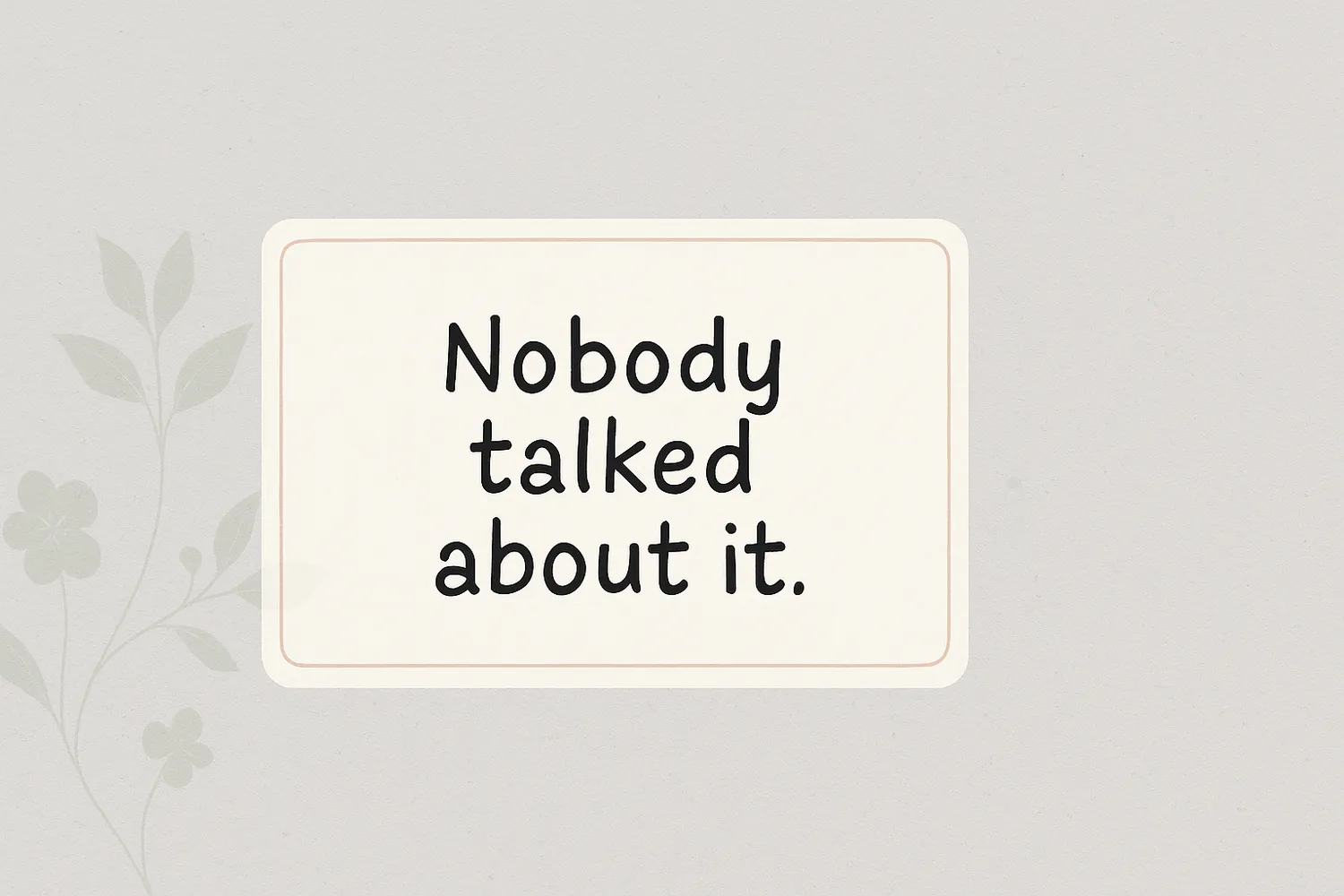
Nobody talked about it.
For my fellow millennials: cue the health class scene from Mean Girls (2004)
Don't have sex. Because if you do, you'll get pregnant and die.
Anyway, looking back now, I realize how much we weren’t taught —
how silence filled the space where curiosity, learning, and understanding should’ve been.
That silence made room for confusion, shame, and harm to grow quietly.
Finding My Voice
When I first sat down to write this, I thought I’d want to furiously list every degrading word I was told, every non-consensual touch —
to scream, LOOK. EVERYONE, LOOK. IT WAS ABUSE.
All the times people saw me crying, “being dramatic,” acting out or causing a scene "for attention" —
there was a reason.
There was a why.
But after rewriting this more times than I can count, I realized that my desire to list everything was actually for two powerful reasons —
taking back control and awareness. What it's not for, is pity or to prove anything to anyone.
- Naming what happened leaves no more room for questioning. I get to validate that what happened was real. Being the one to close that chapter is so healing. Here I am, standing powerfully on my own, trusting myself, knowing that believing myself is enough.
It’s reclaiming control. It’s quieting the noise. It’s me saying — it happened. And I am still here.
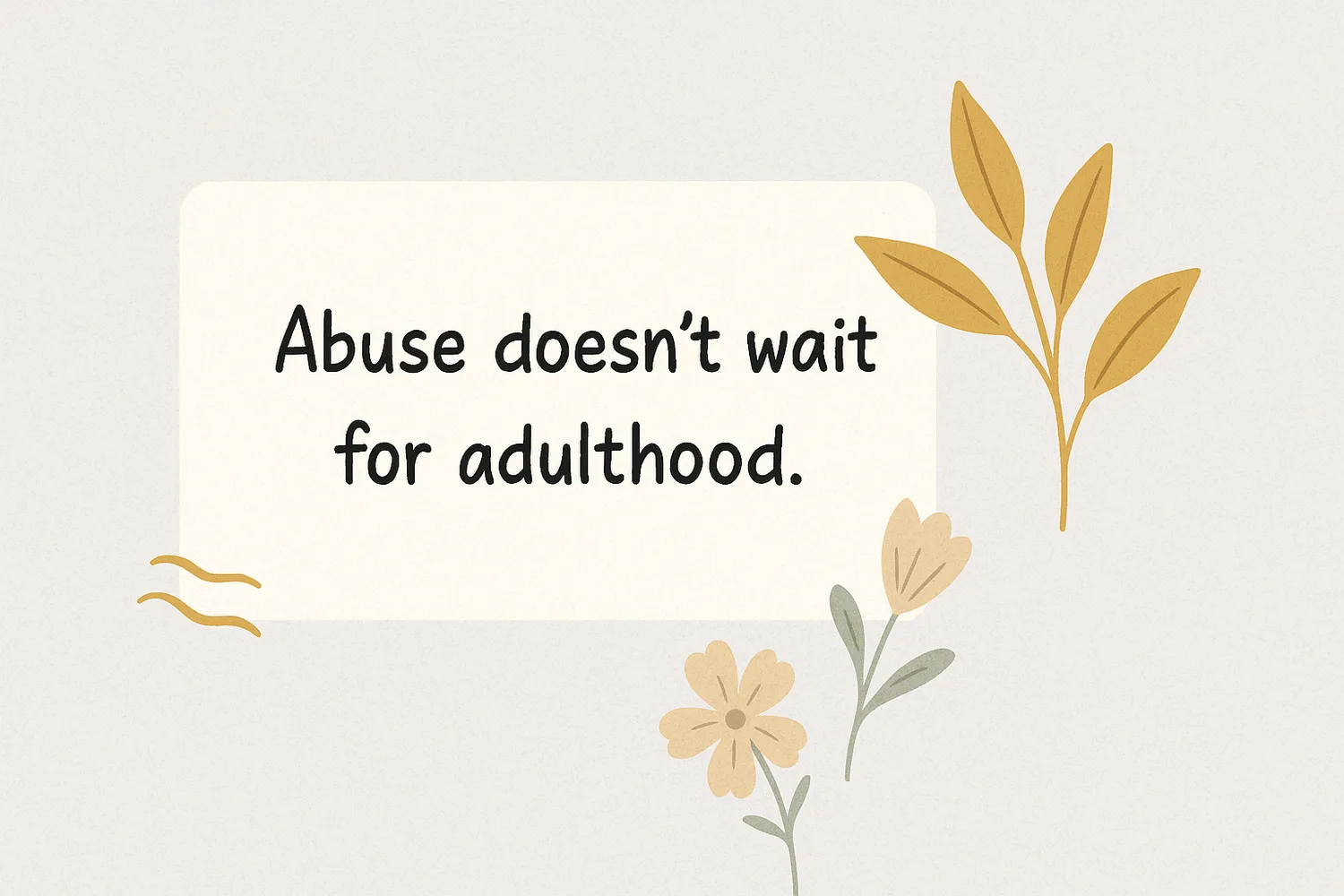
- I was fourteen, fifteen, sixteen years old — experiencing real, terrifying, effective abuse. I want other teens to read these examples and recognize them in their own relationships. To know they're not alone, not crazy, to have the courage to leave and to choose themselves. I also want adults to read them and finally believe that abuse, violence, and manipulation don’t wait until adulthood.
They start early.
This blog isn’t to shame or blame myself, survivors, or adults —
it’s about reflection, awareness, prevention, and care. It’s an invitation to sit with what could be different, to have the conversations that should’ve happened, and then to do better.
Give youth the language to know when something they hear or feel isn't factual, healthy or empowering.
Say vagina and penis. Say labia minora and majora. Say that they all look and feel different. Talk about masturbation — don’t shame it, but teach how, when, and where to do it safely and hygienically. Puberty and pleasure happen in every body without needing a “turn-on” button, so why are we waiting? Why are we silencing? Why aren’t we normalizing, explaining, seeking to understand?
Knowing these things would have given me the awareness to think, Ope — there’s something off here.
Teen dating violence is real. It’s not youth "just being young and dramatic".
What happened to me shouldn’t have happened, but it did. And it makes sense and is OK that I still carry — something that shows up in my body, in my relationships, in my work.
But that’s the thing: it shows up — it doesn’t control me or define me.
It’s just there.
What It Looked Like: The Part Where I Need to Name It
What was happening to me wasn’t love. It was control, dressed up as concern — manipulation disguised as care. Abuse doesn’t care if you’re young, unsure, or still figuring out who you are. It finds ways to make you doubt yourself, even when you think you’re safe.
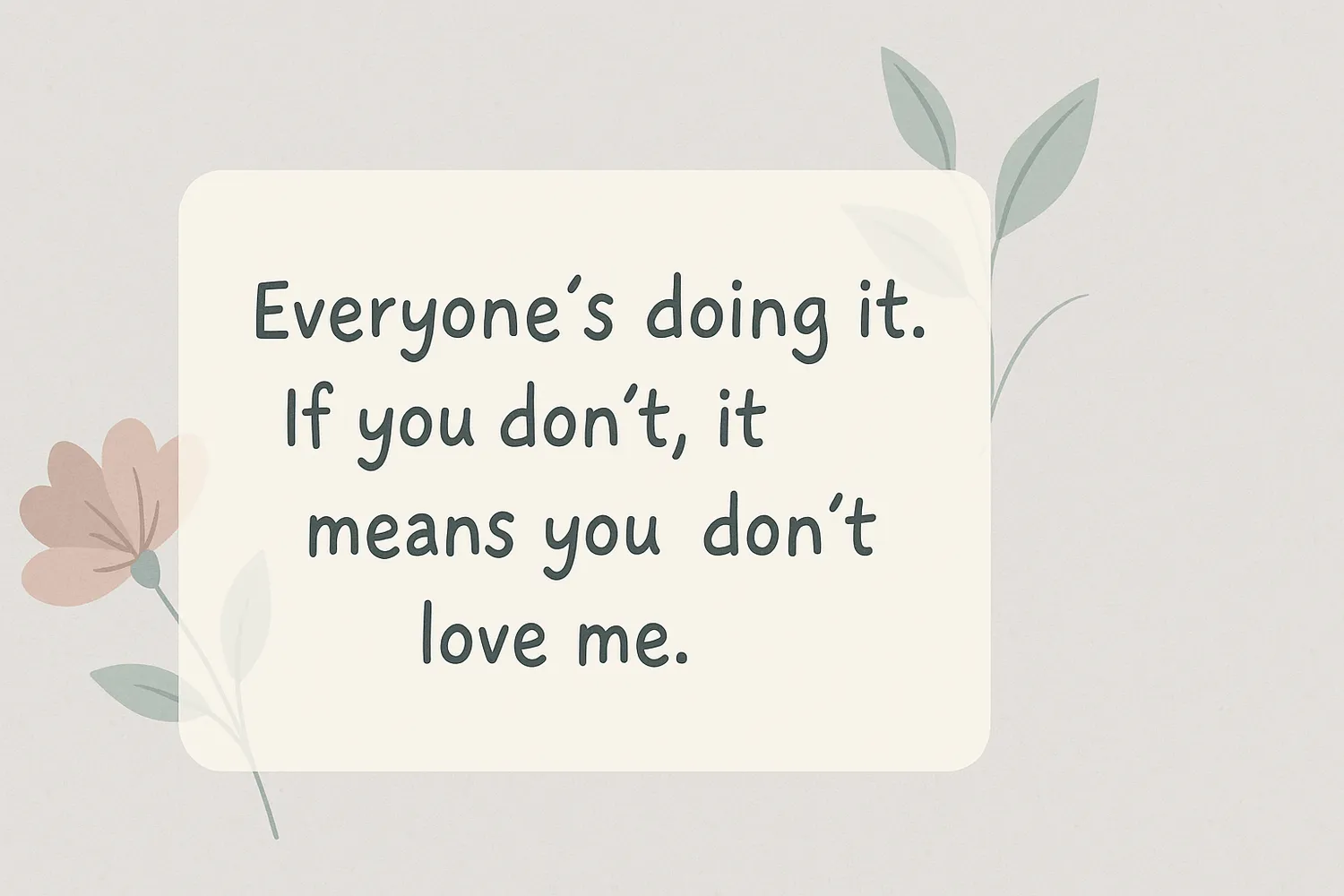
“Everyone’s doing it. If you don’t, it means you don’t love me.”
I can still hear that clearly. He’d tell me about his friends and what their girlfriends were doing — as if it proved I should too. He made me come over before every game because he said he “needed” to finish in order to play well, and if he didn’t play well, somehow that was still my fault.
I had to tell him where I was, what I was wearing, who I was with — and even when I did, I’d still hear things like, “That’s not what I told you to wear,” or, “Your shorts are too short,” when it was literally my soccer uniform. He’d show up in friends’ neighborhoods where I said I’d be, and make me come outside to prove there were no guys there. My friends hated it, and honestly, I get it.
I was often late to class because of him. You know those five minutes between bells — no matter how far your next class was? I had to see him between every period. If we didn’t share a lunch, I’d sometimes eat in the library or even the bathroom so that I was alone — so I couldn’t be accused of “cheating.”
I’ll never forget him showing me his dad’s gun case in their cold, unfinished Michigan basement. He’d stand me in front of it many times, silent, like a threat he didn’t have to say out loud.
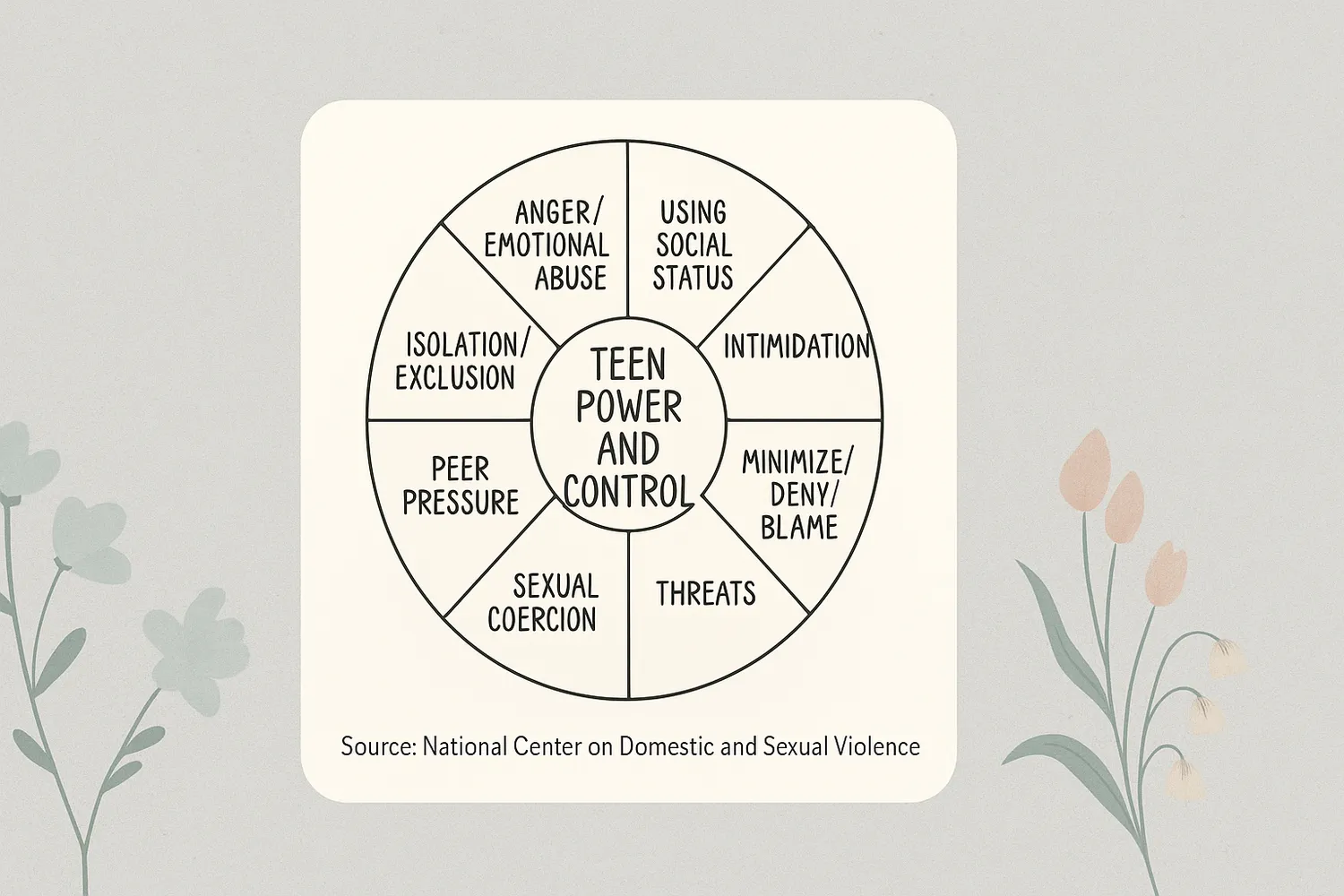
Even after we broke up, he still controlled me. There were nights I slept in my car because he somehow convinced me that — even though he was dating someone else — I wasn’t allowed to stay overnight at friends’ houses or at parties where boys might be. It’s wild to think about the control he had over me, and all we had were flip phones.
My experiences led me to choose advocacy after college. I wanted to walk alongside survivors in ways I hadn’t been supported, in the ways I didn't know even know I needed — to create spaces and systems that could actually listen, protect, and validate.
Becoming an Advocate
After college, I became that advocate. My second job was at a domestic and sexual violence agency — walking alongside survivors, hearing their stories, sitting with them the way no one had sat with me. It was deeply healing — and deeply hard.
Eventually, I had to ask myself: am I showing up as my best self, or am I burning out from secondary trauma? It was the latter. Leaving that work was tough, but doing the work itself was a big f_ck you to him — to know that something born from harm could transform into purpose.
And leaving wasn’t a moment of not showing up for survivors; it was another act of taking control back, carrying those lived experiences into every part of my life. Now, I feel peaceful and grounded. I show up for survivors everywhere — in any job, in any space. At the grocery store. In trainings. In conversations with my niece, my partner, my family.
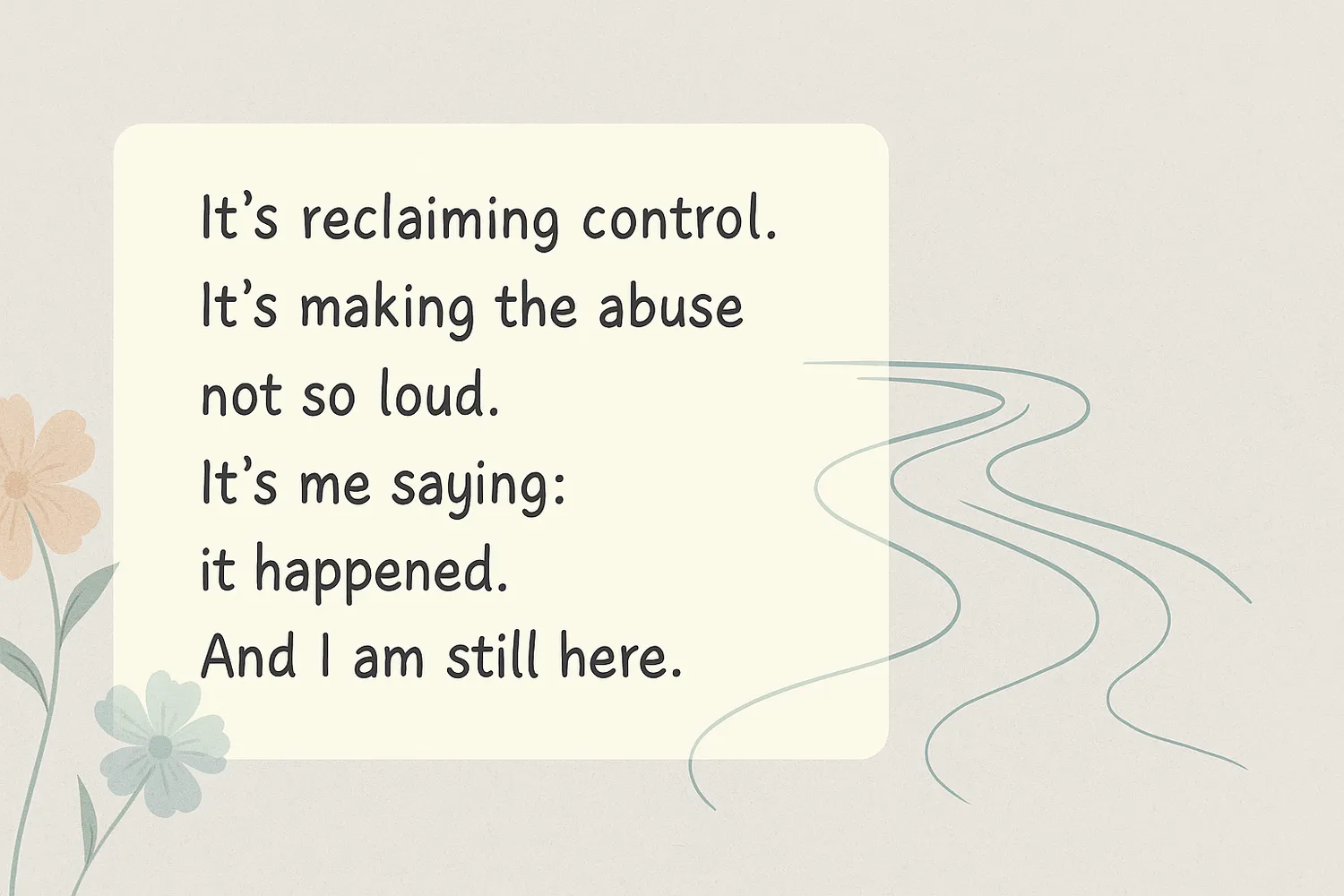
And remember when I said the abuse is “just there”?
This is what I meant.
It’s there to help me notice when something feels off in someone else’s relationship.
It shapes the survivor-centered language I use in my work — even when no one discloses.
It reminds me, in my lowest moments, that I’ve been through hell and made it through.
It keeps me humble, curious, and community-oriented.
It’s what makes me unafraid to talk about hard things, to imagine how I want my future kids raised, to help others navigate their own pain.
It helps me understand the layers behind behavior — the why — and it keeps me grounded in empathy.
Sometimes invisible trauma turns into an invisible superpower.
I’m proud that I became someone my younger self could have turned to. Proud that I stopped needing to prove my story. Proud that I believe myself now.
Believing in Me
There’s no way I could write this blog without mentioning my grandma. I think about her so much. I knew she was special when I was younger, but I didn’t understand to what extent.
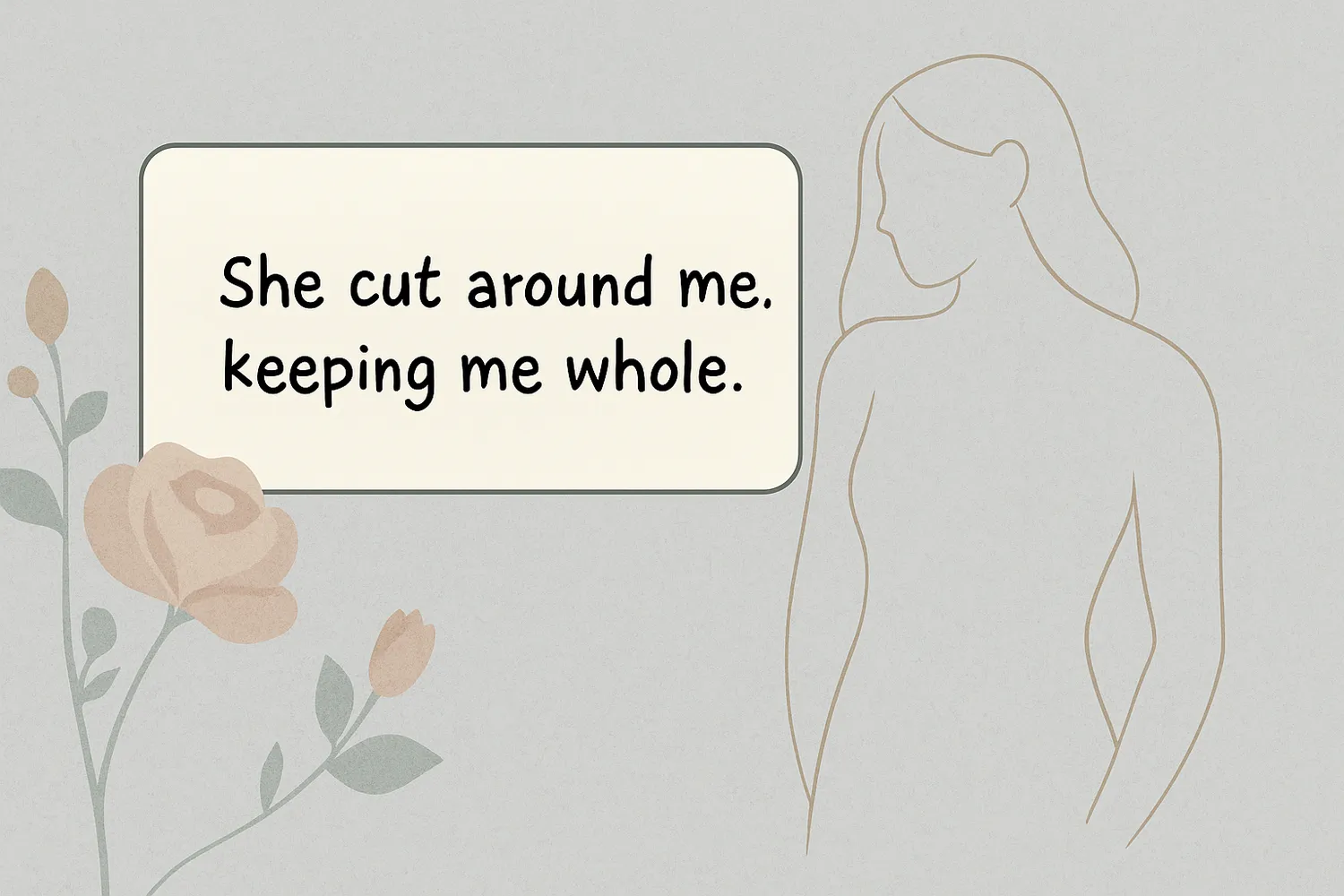
I get emotional often remembering her — specifically how she carefully cut my abuser out of pictures of us from homecoming and prom.
She traced around my body so delicately, almost as if she knew it had been used, betrayed, and made to feel disgusting. She traced each curve like she was protecting something sacred, affirming its beauty even after abuse, and then hung those photos back up without him.
At the time, I hadn’t even named what was happening to me. But she knew.
I know she knew.
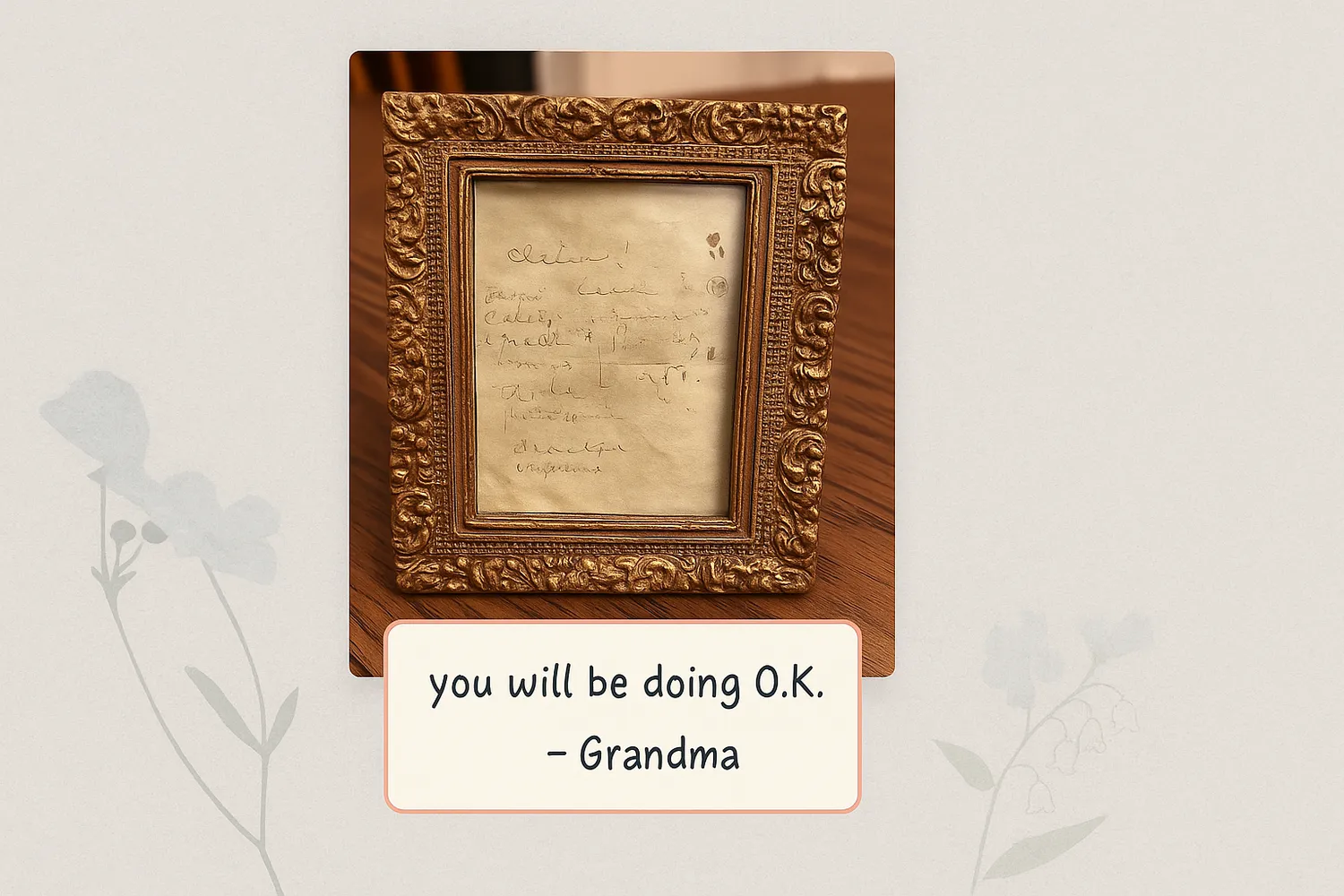
Before she passed, she left me a note that said, “You will be doing okay.” And she was right.
When I talk about my experiences in my spaces, and even now as I write this, I think of her — her quiet strength, her way of carrying pain without making it heavy. She didn’t need to talk about what she’d been through; she just modeled survival.
I still picture her with those scissors, cutting around me, keeping me whole. I wish I could give her a picture of me and my partner now — tell her she doesn’t have to cut this one up. This one sees and loves me the way she did.
Adults who believe kids matter. The ones who listen without judgment, who act from care, who see and affirm even when the child can’t see it yet — they matter. They might not be validated right away, but their belief plants something lasting. So if you’re that adult, don’t stop showing up.
This isn’t the second blog I thought I’d write, but I’m so glad I did. It’s not a pity story — it’s a reclamation. And maybe it’s also the one someone else needs.
Nobody ever sat me down to explain what healthy love looked like — or how control could be masked as concern, love, or jealousy. Nobody told me what to do when the person who says "I love you" also says "you’re crazy" or "you made me do this." The lesson wasn’t taught to me then, but I figured it out.
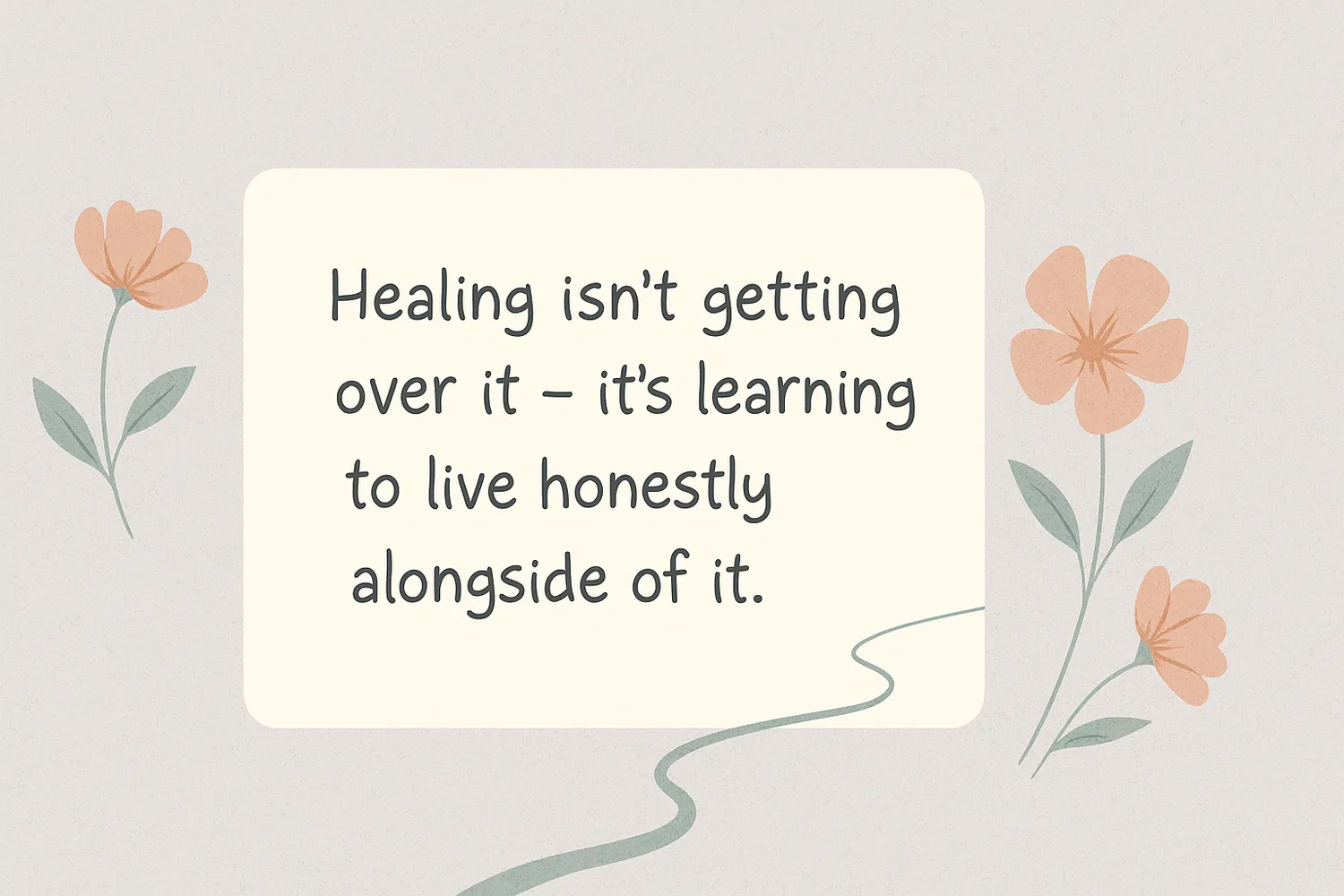
And maybe that’s what healing really is — not getting over it, but learning how to live honestly alongside it.
💜 If you or someone you know is experiencing teen dating violence 🧡:
Love Is Respect | Text LOVEIS to 22522 | 24/7 information, support, and advocacy to young people between the ages of 13 and 26 who have questions or concerns about their romantic relationships
The Trevor Project | Suicide prevention and crisis intervention for young people
National Domestic Violence Hotline | 1-800-799-SAFE | Text START to 88788
RAINN National Sexual Assault Hotline | 1-800-656-HOPE | Text HOPE to 64673
Looking for a community who gets it? Check out my Totem Spaces, Still Sick, Still Here and Transition: Panic. Pause. Pivot. Repeat.