


Imagine standing at a crossroads: one path leads to a circle of peers who share similar struggles, while the other leads to a trained professional offering specialized knowledge. This isn't just a metaphor—it is the very real choice that millions face when seeking mental health support. While both paths offer valuable benefits, they each serve distinct purposes that might align differently with your personal journey.
Understanding these differences isn't just helpful—it's fundamental for taking that meaningful first step toward better mental health. Whether you're dealing with everyday stress or charting through deeper waters, knowing which option to choose—or how to combine them—could be the key that unlocks your path to healing.
What Are Online Support Groups? How Virtual Communities Support Mental Health
Online support groups connect people with similar experiences—such as identity struggles, anxiety, grief, and motherhood—within a virtual environment. These digital communities offer a judgment-free environment where members can share stories, provide support, and connect. Since many of these groups are peer-led, they foster a welcoming, non-hierarchical form of communication that feels less intimidating than traditional therapy settings
Typically held in virtual spaces, these groups allow members to interact anonymously, sharing personal stories, coping strategies, and encouragement. The primary goal is emotional healing through shared understanding, rather than professional guidance.

The Benefits of Online Support Groups for Mental Health and Well-Being
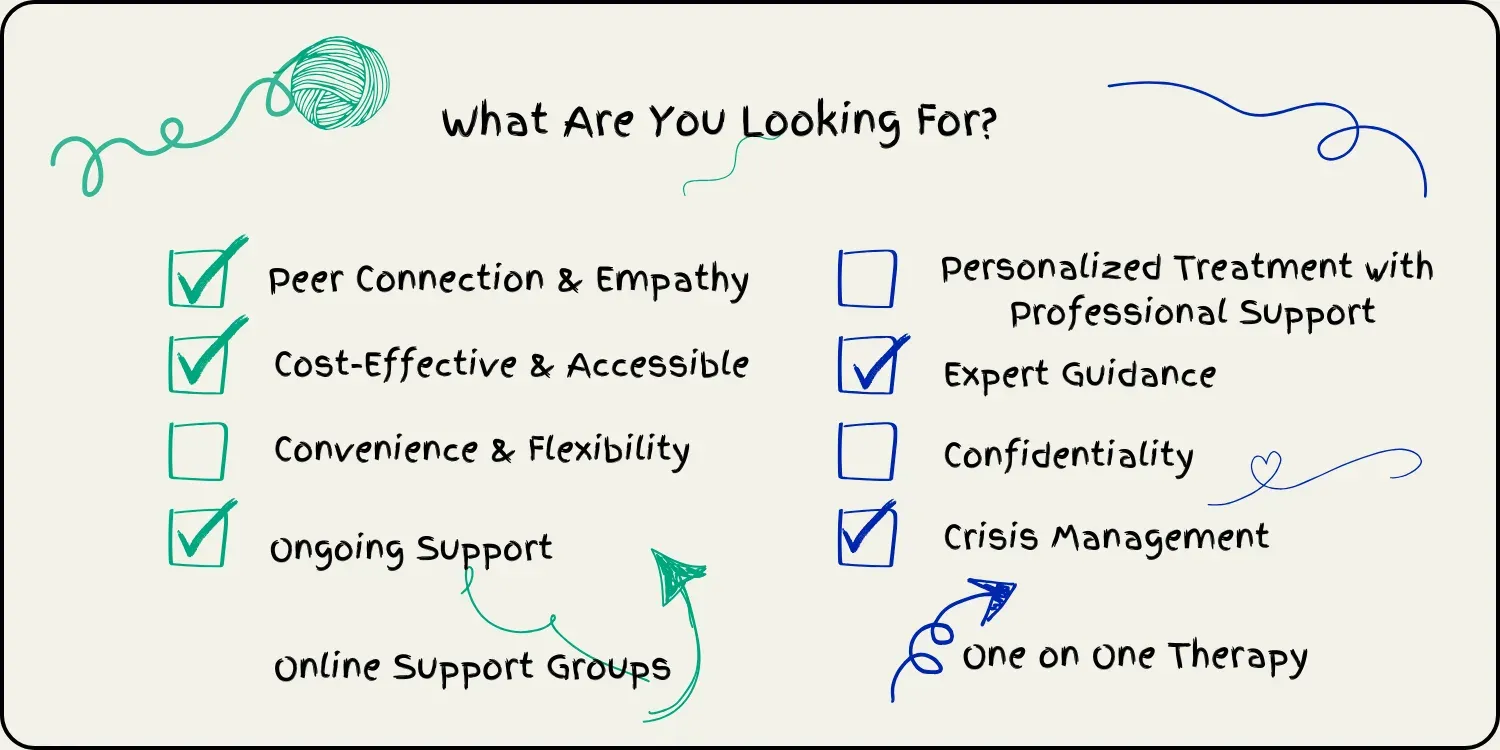
- Peer Connection & Empathy: Join a community of people who truly understand what you're going through, providing emotional validation and support.
- Cost-Effective & Accessible: Many online support spaces are free or have minimal fees, offering a budget-friendly alternative to traditional therapy. No insurance is required.
- Convenience & Flexibility: Participate from the comfort of your own home. Online support groups are often more flexible in terms of timing and scheduling, making it easier to fit into your life.
- Ongoing Support: Unlike therapy sessions that may have a limited number of appointments, many online support groups operate continuously, providing ongoing support that you can access whenever needed.
For many people, the sense of community in online support groups provides comfort that's difficult to find elsewhere. In these spaces, members don't need to explain their triggers—everyone just get it. This shared understanding can be deeply healing in itself.
The Benefits of Therapy: Professional Guidance for Mental Health
According to the National Institute of Mental Health (NIMH), psychotherapy—especially evidence-based approaches like Cognitive Behavioral Therapy (CBT) and Dialectical Behavior Therapy (DBT)—helps individuals process emotions, develop coping strategies, and manage mental health conditions effectively. Therapy is particularly beneficial for conditions like depression, anxiety, and PTSD. These experts—including psychologists, psychiatrists, licensed clinical social workers (LCSWs), and professional counselors—complete extensive education and clinical training specifically designed for addressing psychological issues effectively.
During individual therapy sessions, these mental health professionals apply scientifically validated methods, such as CBT, DBT, and psychodynamic techniques. These approaches assist clients in developing practical coping strategies, processing difficult emotions, and addressing specific mental health challenges that may be too complex for peer support alone. The therapeutic relationship itself becomes a key component of healing, offering consistent support and psychological safety that complements the emotional support found in online support groups.
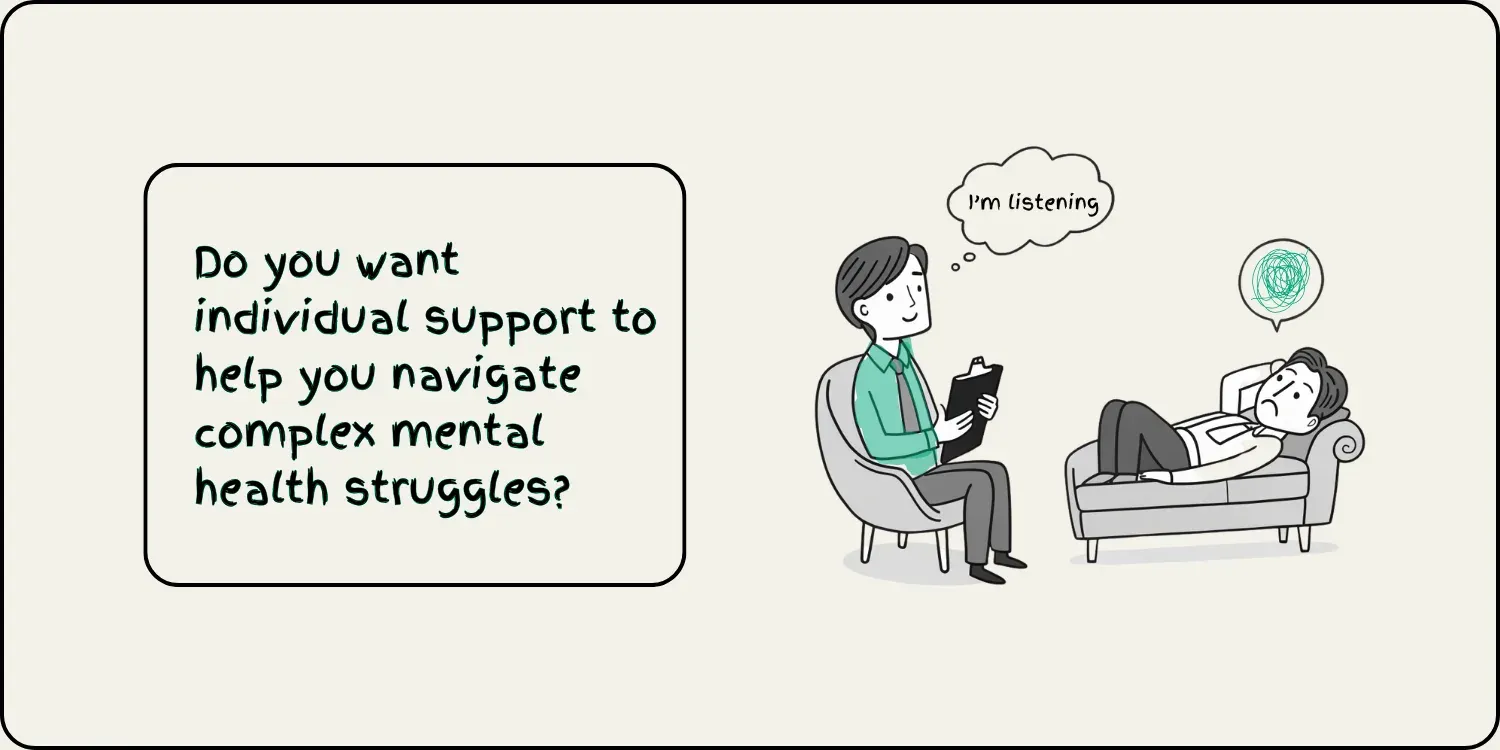
What are the Benefits of Professional Therapy?
- Personalized Treatment with Professional Support: Therapy provides expert tools to manage your specific needs, whether you're dealing with anxiety, depression, trauma, or other clinical conditions
-
Expert Guidance: Therapists are trained to help you process emotions, identify unhealthy patterns, and work toward long-term healing with evidence-based techniques, such as Cognitive Behavioral Therapy (CBT), mindfulness, or EMDR
-
Confidentiality: In therapy, everything shared is confidential, creating a safe, private space to explore deep emotions and sensitive topics
- Crisis Management: Receive guidance during acute mental health emergencies
During individual therapy sessions, these mental health professionals help clients develop practical coping strategies, process difficult emotions, and work through specific mental health challenges. The therapeutic relationship itself becomes a powerful tool for healing, offering consistent support and psychological safety that complements what support groups provide.
Should You Join an Online Support Group? Key Questions to Ask Yourself
Consider asking yourself these questions to help determine if an online support group is the right fit for your mental health journey:
- Do you value empathy?
- Are you looking to give and receive support from people outside your usual circles?
- Do you want to break free from isolation, especially when friends or family may not fully understand your experiences?
- Do you value sharing real-world strategies with others who truly understand your challenges?
- Do you prefer to engage at your own pace, without pressure or rigid expectations?
- Are financial constraints making regular therapy challenging?
- Are you looking for a community of people who validate your experiences?
Answering 'yes' to one or more of these questions suggests that an online support group may be a great option for you."
When to Choose Therapy Over a Support Group: Key Signs You Need Professional Help
Think therapy might be a better fit? Ask yourself these questions to find out:
- Do you value professional boundaries and expertise?
- Are you in crisis and need immediate, individualized support?
- Do you prefer structured one on one sessions led by a licensed professional?
- Do you struggle with social anxiety and feel uncomfortable sharing in a group setting?
- Do you need professional guidance tailored to your unique challenges?
- Do you need medication management or clinical intervention to address your mental health?
- Are you working through trauma or complex emotional issues that require specialized care?
If you answered "yes" to any of these questions, therapy may be the more appropriate choice for you.
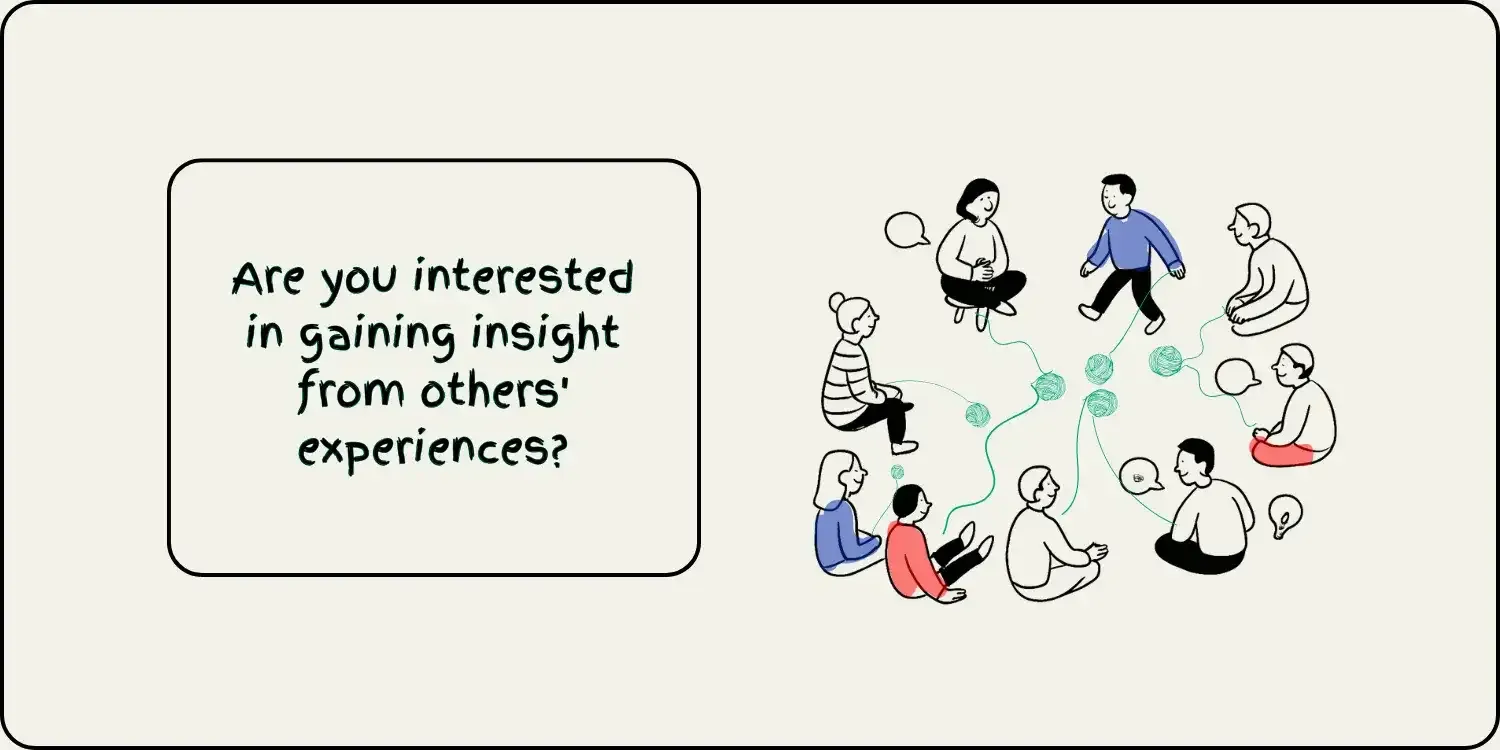
Can You Do Both? How Therapy and Support Groups Work Together
Many mental health professionals recommend using both therapy and support groups together for the best results. This combined approach has several key benefits:
- Therapy provides professional insights, while support groups offer shared experiences that can reinforce your growth.
- Group discussions can reveal blind spots that you might not uncover in therapy alone.
- Support groups can motivate you and keep you accountable on your path to personal growth.
- Therapy offers structured healing, while support groups provide healing through community understanding.
- Support groups can help maintain the progress you've made in therapy between sessions.
The Bottom Line: Support That Works for You
The most important factor in choosing between online support groups and therapy—or deciding to use both—is finding what works for your unique situation. Mental health support isn't one-size-fits-all, and the "right" choice depends on your specific needs, preferences, and circumstances.
Whether you choose online support groups, professional therapy, or a combination of both, taking that first step toward support is something to be proud of. Your mental health matters, and seeking the right support is an important act of self-care.
Ready to connect with a supportive community? Explore the Totem Spaces Schedule now and find a group that fits your needs! Totem Spaces Schedule