


I used to apologize for breathing.
"Sorry for the noise," I'd whisper in a quiet library. "Sorry to ask," before requesting information I needed for my job. "Sorry to exist," was essentially what I communicated daily without realizing it.
Sound familiar? If you're someone who finds "I'm sorry" tumbling from your lips before you've even had your morning coffee, you're walking a path I know all too well.
The first time someone pointed out my excessive apologizing, I was shocked. "But I'm just being polite," I told myself. Yet as I started paying attention, I realized how this seemingly innocent habit was eroding my confidence and changing how others saw me.
In this deeply personal guide (born from my own journey and reinforced by research), you'll discover why we over-apologize, how it quietly sabotages our relationships and careers, and most importantly, the exact strategies that helped me—and can help you—break free from this self-diminishing pattern.
What is Over-Apologizing?
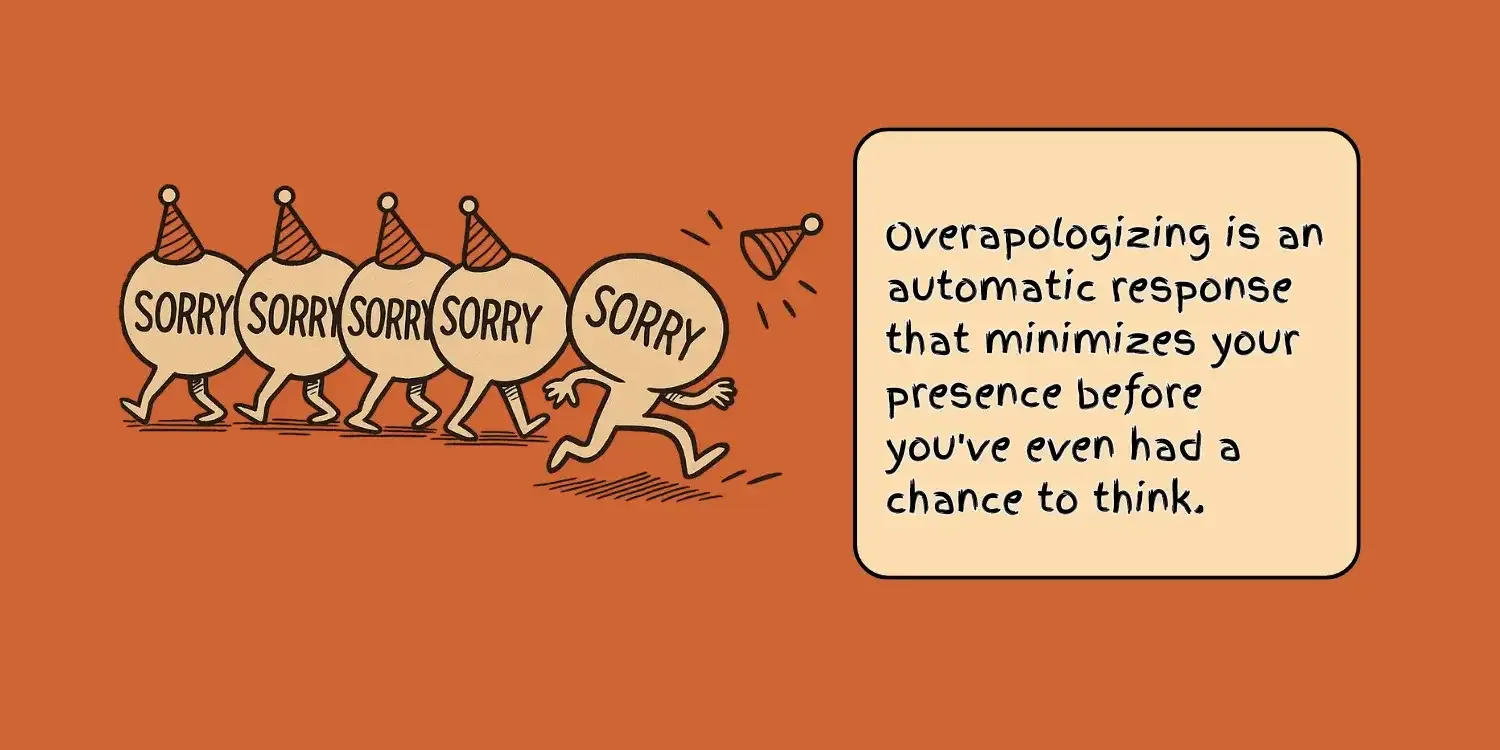
Over-apologizing is the habit of saying "sorry" when no apology is needed—like when you speak up, take up space, or simply exist.
It’s not about being polite. It’s about an automatic response that minimizes your presence before you've even had a chance to think.
Overtime, it chips away at your confidence, your voice, and how others see you.
Why Do People Over-Apologize? Understanding the Root Causes
Chronic apologizing often stems from childhood experiences. Many of us learned that staying small kept us safe—especially if we grew up around unpredictable emotions, high expectations, or critical environments.
As psychologist Dr. Ellen Hendriksen notes in her book How to Be Yourself, over-apologizing is often a "safety behavior"—a strategy to avoid rejection or conflict before it even starts.
You might have learned to:
- Smooth over discomfort as quickly as possible
- Apologize simply for existing or having needs
- Link worthiness to being easygoing, quiet, or agreeable
These patterns can feel automatic well into adulthood—but they can be unlearned with the right strategies.
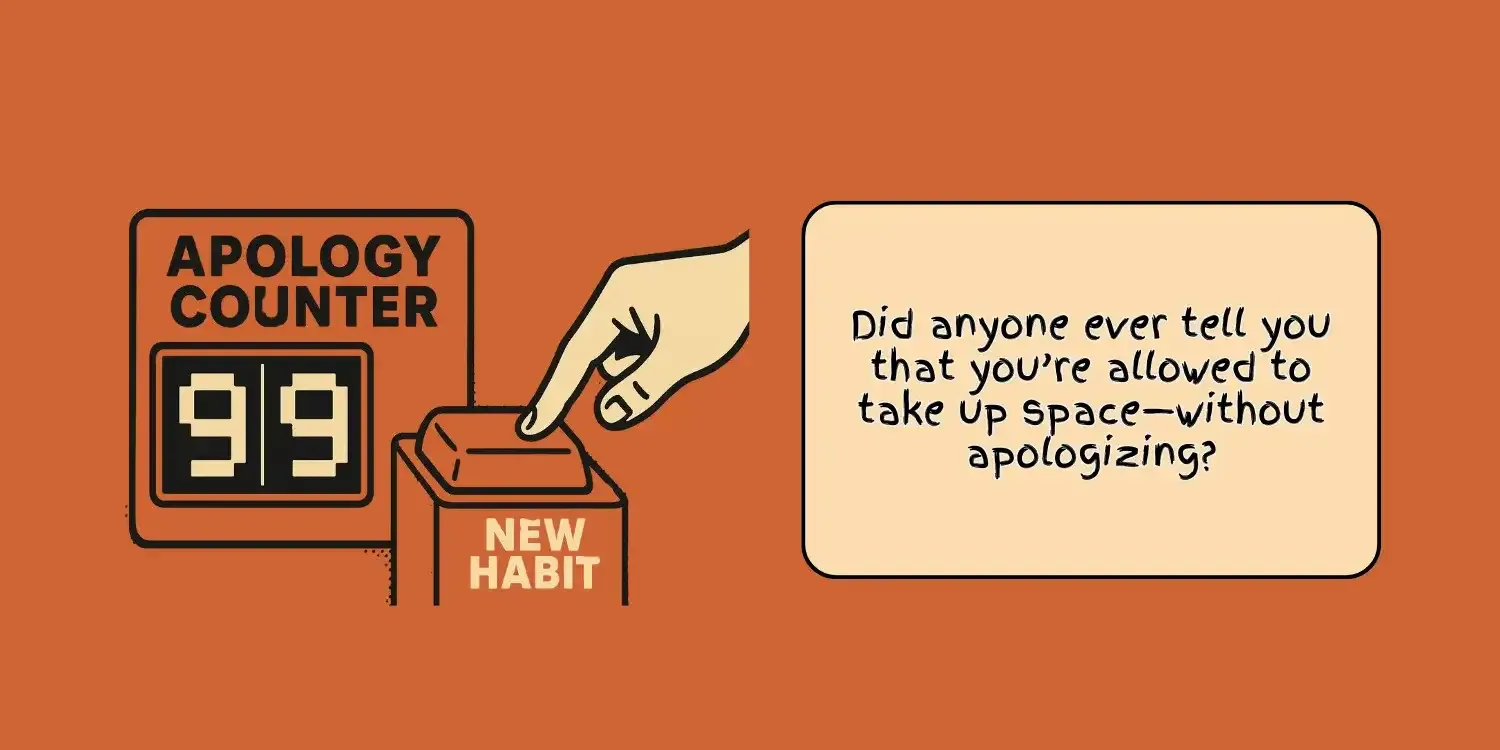
Maybe nobody ever told you that you didn’t have to apologize for taking up space. Maybe they made you feel wrong for simply existing out loud. But you were always enough. And you still are.
The Hidden Consequences of Saying "Sorry" Too Often
When you over-apologize, it doesn't just affect how you feel internally—it also impacts how others perceive you.
Research published in the Journal of Psychological Science confirms that frequent apologizers are often viewed as:
- Less confident and credible
- Less assertive and competent, even when their intentions are positive
- More insecure about their position or expertise
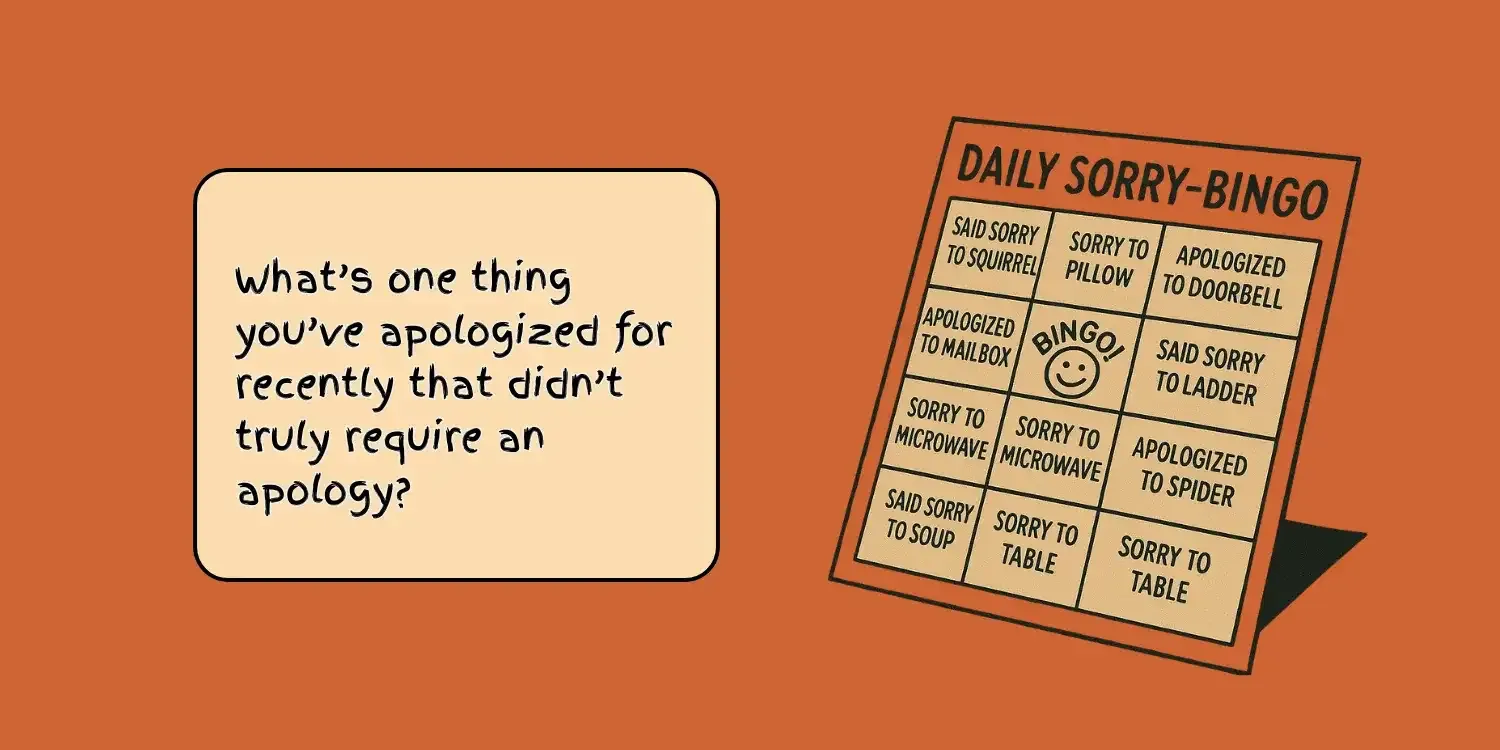
Additionally, over-apologizing can:
- Dilute the impact of genuine apologies when they're truly needed
- Signal to others (and yourself) that your needs are less important
- Create a pattern of self-diminishing behavior that's hard to break
Learning how to avoid over-apologizing becomes essential not just for social perception, but for your own self-concept and career advancement.
When Should You Actually Apologize?
Avoiding over-apologizing doesn't mean never saying you're sorry. A heartfelt apology is vital when:
- You've hurt someone's feelings
- You've broken trust or crossed a boundary
- You've made a mistake that caused actual harm
The key distinction: Apologize when harm is real—not when you're simply existing, expressing an opinion, or setting a boundary.
When used appropriately, apologies build trust and strengthen relationships. The goal isn't to eliminate apologies but to make them meaningful again.
5 Effective Strategies to Avoid Over-Apologizing
Breaking the habit of reflexive apologizing isn't about being cold or defensive—it's about being conscious, confident, and compassionate toward yourself.
Here are five evidence-based approaches that can help:
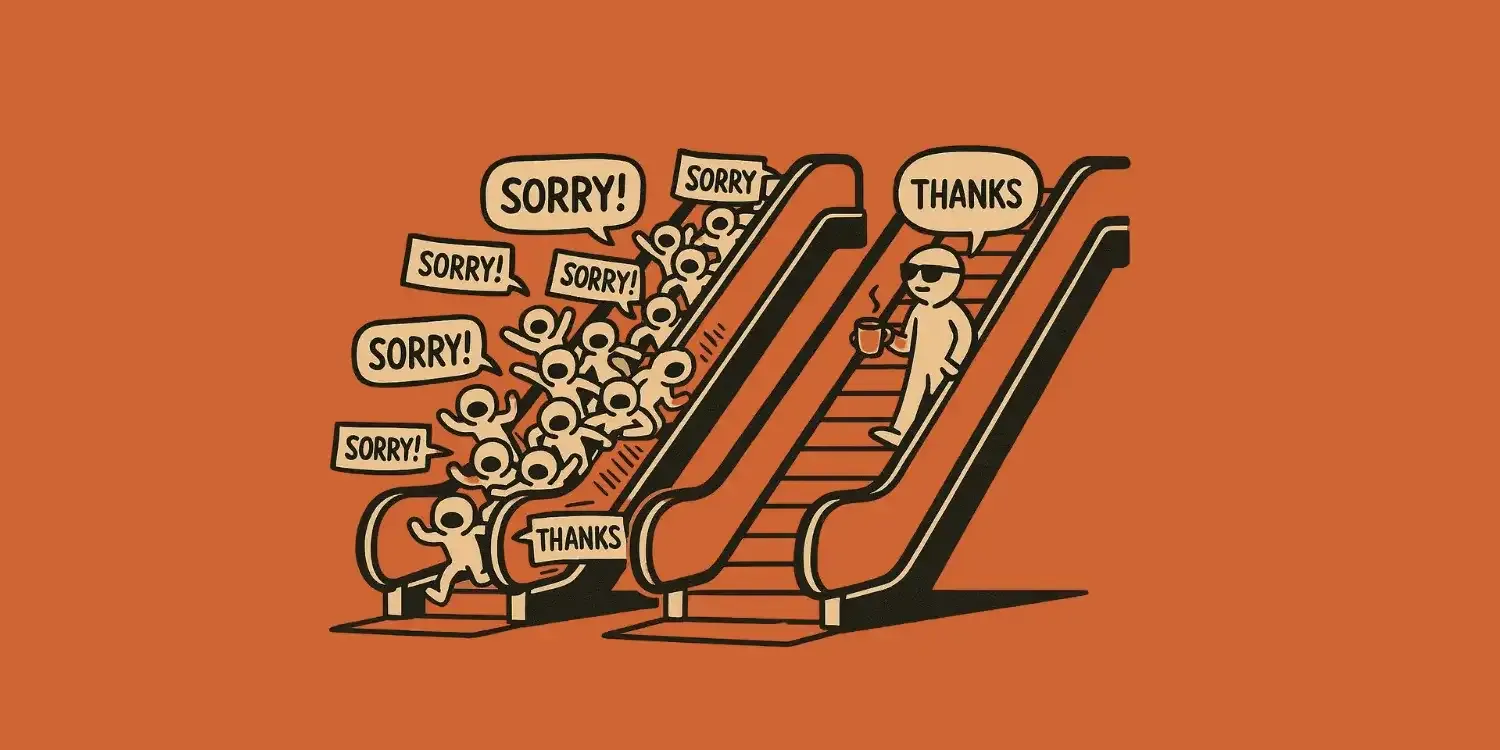
1. Build Mindful Awareness
You can't change a pattern you don't recognize. Start by simply noticing when you apologize throughout the day. Ask yourself:
- Was harm actually done?
- Was I trying to manage someone else's comfort at my expense?
- Was I apologizing for existing or taking up space?
Try this: Keep a small notebook or use a notes app to track your apologies for one week. Note the situation, who you were with, and how you felt. This awareness alone often reduces unnecessary apologies.
According to the American Psychological Association, mindfulness improves emotional regulation and reduces automatic stress responses—including the urge to apologize unnecessarily.
2. Heal Your Inner Patterns
Over-apologizing for your feelings, needs, or boundaries often traces back to early emotional wounds. Inner work helps you reconnect with and nurture the part of yourself that learned survival through silence and submission.
Try this: When you catch yourself about to apologize, pause and ask: "What am I afraid will happen if I don't say sorry right now?" The answer often reveals the underlying fear driving the behavior.
Therapeutic approaches like cognitive behavioral therapy (CBT) are particularly effective for addressing these automatic thoughts and behaviors.
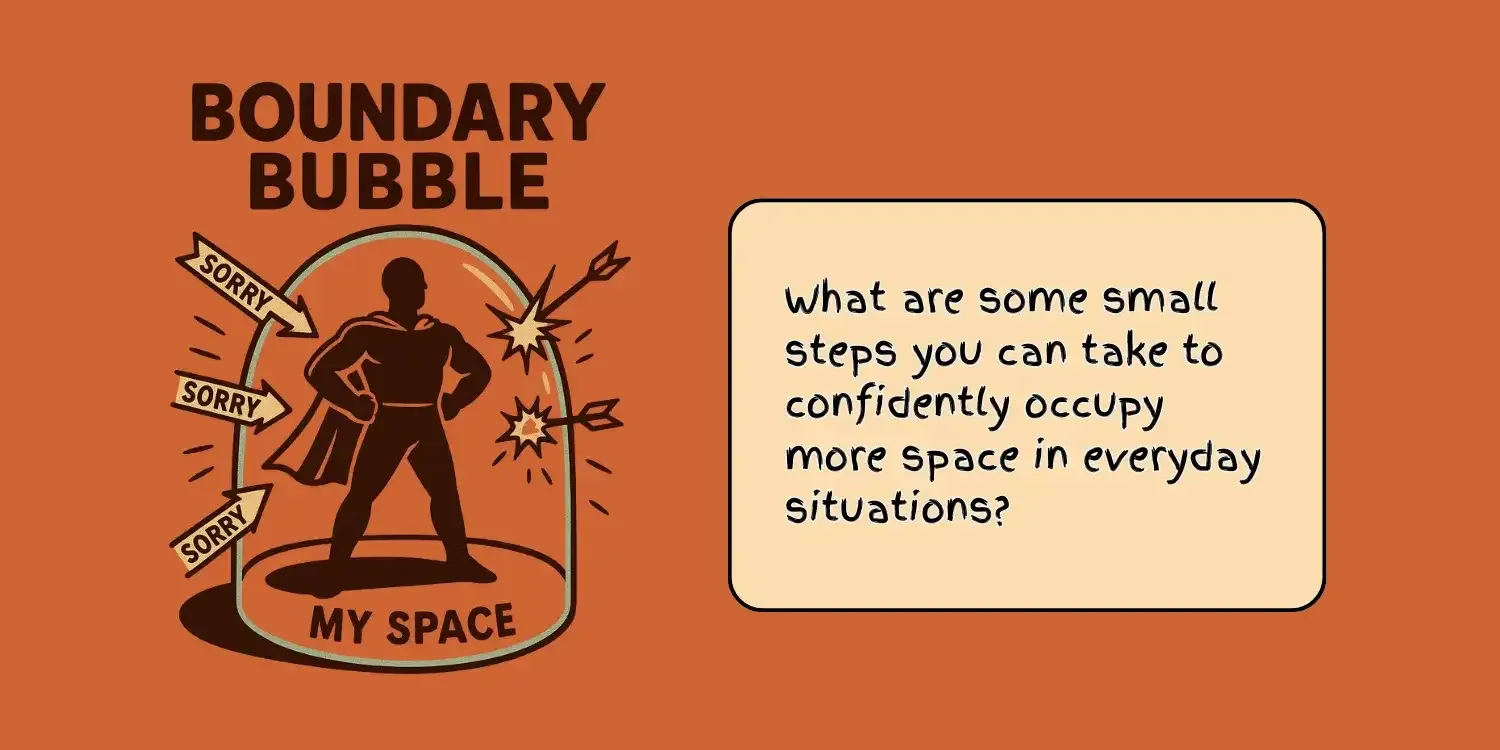
3. Strengthen Your Boundaries
 ,
,
When you're uncertain about your right to take up space, it's easier to feel guilty just for "being too much." Learning how to avoid over-apologizing means practicing healthy boundary-setting.
Try this: Practice setting small boundaries daily. This might be as simple as:
- Saying "no" to an additional request when your plate is full
- Expressing a preference when asked where to go for lunch
- Taking time to think before responding to a question
Each time you honor your boundaries, you reinforce that your needs are valid—no apology needed.
4. Practice Somatic Awareness
The habit of apologizing often lives not just in the mind—but in the body. Tense shoulders, shallow breathing, and nervous fidgeting can all reinforce self-minimization.
Try this: Before entering situations where you tend to over-apologize, take three deep breaths. Feel your feet on the ground. Roll your shoulders back. This physical reset helps interrupt the apology pattern before it starts.
Even daily stretching, meditation, or gentle movement can signal to your body: It's safe to take up space.
5. Replace Apologies with Confident Alternatives
While doing the deeper emotional work, practice new language habits that express confidence without apology.
| Instead of Saying... | Try Saying... |
|---|---|
| "Sorry I'm late." | "Thank you for your patience." |
| "Sorry to bother you." | "Do you have a moment?" |
| "Sorry if I sound stupid." | "I'd like to understand this better." |
| "Sorry for asking questions." | "I appreciate your clarification." |
| "Sorry for needing time." | "I'll need some time to consider this." |
At first, these shifts may feel awkward—but with repetition, they become your new normal as you learn how to avoid over-apologizing
Research from Dr. Kristin Neff shows that self-compassion strengthens emotional resilience, self-esteem, and healthy assertiveness—all critical components in overcoming the habit of excessive apologies.
Daily Practices to Build Confidence and Reduce Reflexive Apologies
Consistency is more important than perfection when learning how to avoid over-apologizing. Here are daily practices you can integrate:
- Morning affirmations: "I have the right to speak and be heard."
 ,
,
-
Quick check-ins before meetings: Take 3 grounding breaths and remind yourself you don't need to apologize for existing.
-
Micro-boundaries: Set small, healthy boundaries each day—like declining a meeting invite that doesn't fit your workload.
-
Confident posture: Stand or sit with your shoulders back and head high. Your body language affects how you feel and how others perceive you.
Confidence is a muscle—the more you exercise it daily, the stronger it gets.
Final Thoughts on Breaking Free from Over-Apologizing
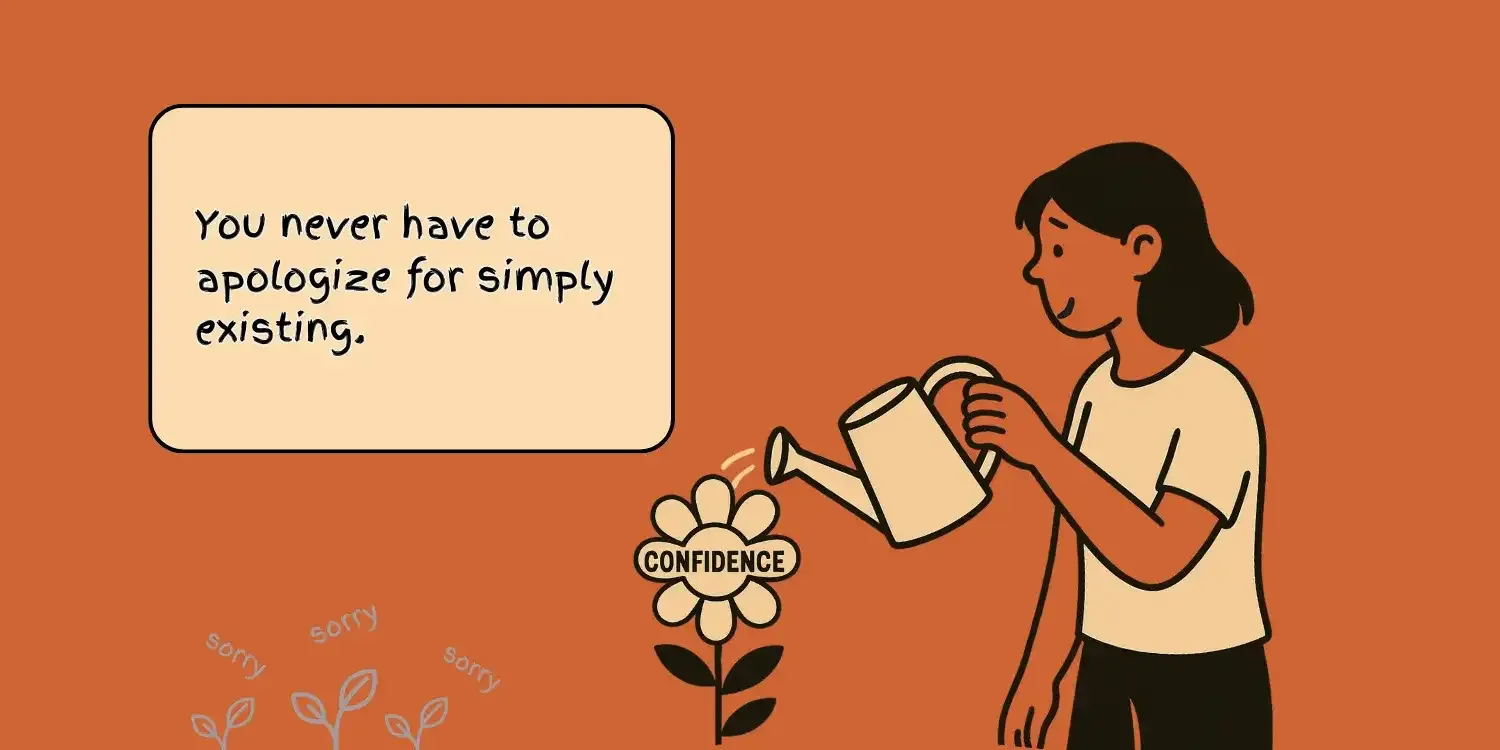
Learning how to avoid over-apologizing is about honoring your voice, your boundaries, and your innate worth. It's about recognizing that you are allowed to exist—unapologetically.
By understanding the root causes, recognizing the consequences, and implementing these practical strategies, you can break free from the reflex of unnecessary apology and step fully into your power.
You deserve to be heard, to be seen, and to take up space—without guilt, and without apology.
👉 Ready to start your journey out of people pleasing?