

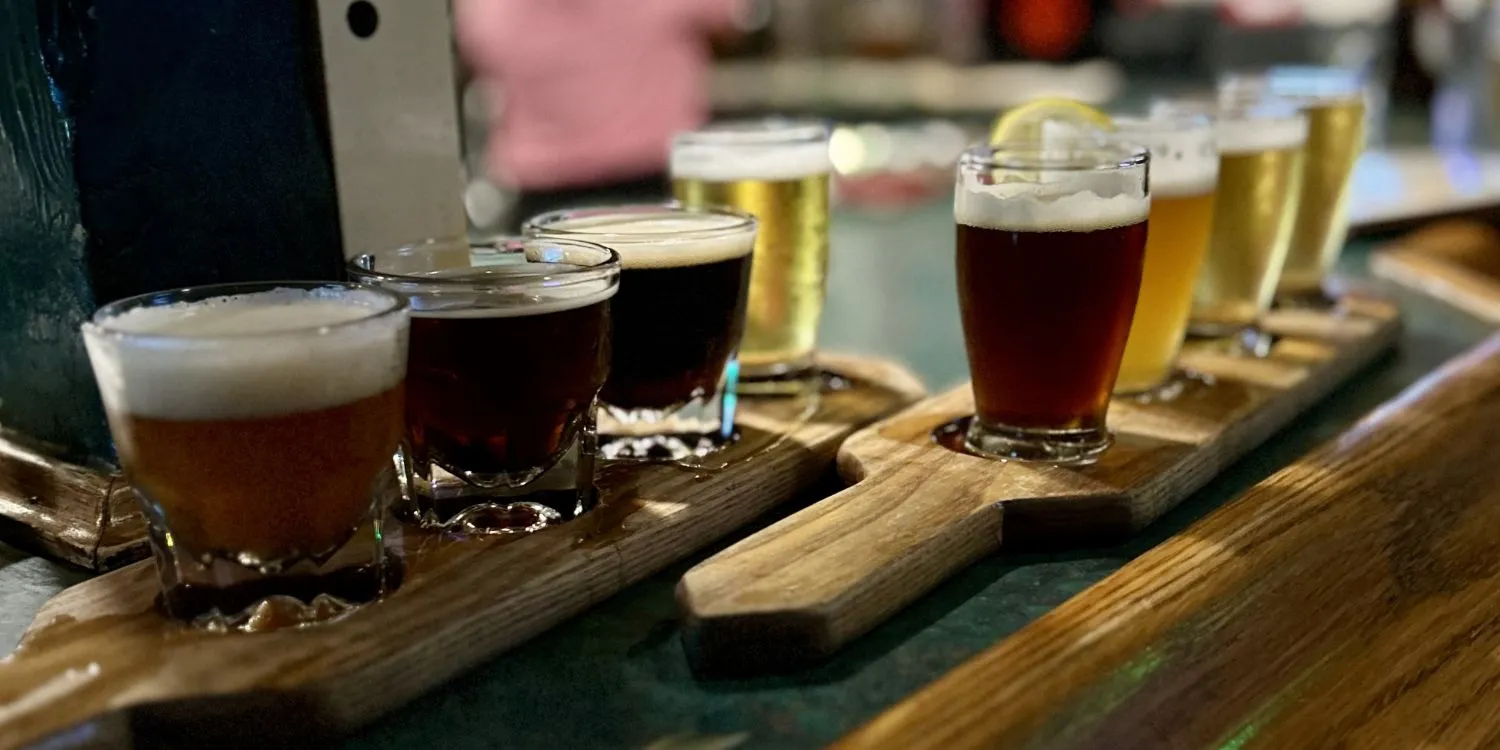
I'm starting to think I needed more help than I asked for.
Logically, the most useful support would come from mentors, therapists, and friends who could help me navigate a new career, a new relationship, life after an old relationship, the loss of a musical partnership, and stepping into my own as a bandleader. The number of things in my life up for processing sits somewhere between a lot and abundance.
Instead, I started revisiting a relationship from my past, blowing up ChatGPT more than a balloon artist at a circus.
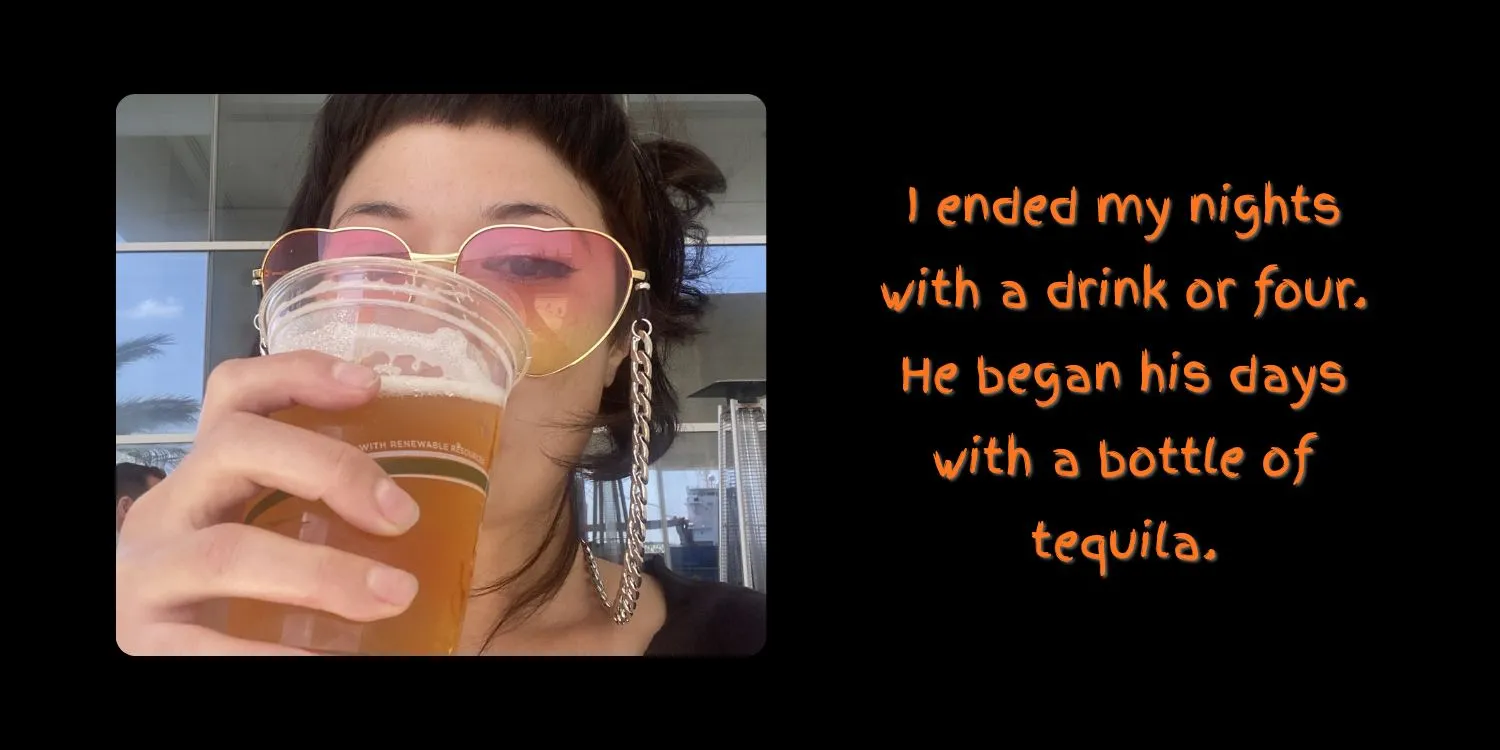
Addiction was the common denominator in fights during the relationship, mainly alcohol. At the time I was too young to really understand what alcoholism was, or that it could be a problem. I admittedly spent most nights of the week drinking away the frustrations of my service job with coworkers who empathized with me. I'm sure that blacking out from shots of SKYY taken too quickly in succession isn't helping my credibility as a narrator. But I will state a key difference without shame: I ended my nights with a drink or four. He began his days with a bottle of tequila.
I started consulting ChatGPT about this relationship a few years ago. I didn't have it in me to communicate with that partner effectively, so I eventually stopped communicating at all. I felt lonely, angry, and misunderstood. And still didn't know why.
Contrary to popular belief, I don't enjoy conflict. When met with resistance too many times I shut down. Which doesn't mean the other person proved their point; it means I'm about to leave. Looking back, a lot of those communication breakdowns were fueled by alcohol, especially his behavior while he was intoxicated.
One night, when the hum of a streaming service droned on for too long I pulled up ChatGPT. I use to get really annoyed when this partner was intoxicated. This is what I asked:
Why do I get so annoyed when my boyfriend is drunk? Like visibly drunk, not just ‘I've had a few drinks and I'm enjoying myself’ drunk. It's like he turns into a different person. Way too excitable, loud talker, and worst of all, incapable of processing what I tell him. It's like he's talking to himself.
The robot's response validated what I was questioning without coddling my feelings. I'm the kind of person who either wants a solution or an explanation, not to have my hand held, at least not in this situation.
The answer basically said: what you're describing is very common. Alcohol suppresses the parts of the brain responsible for self-control, listening, and social awareness. When someone is visibly drunk, they often become louder, more repetitive, more impulsive, and worse at reading cues.
In other words: it does feel like talking to a different person, because neurologically, it kind of is.
The explanation that stuck with me most was about emotional availability. When someone is very drunk, even if they're cheerful and affectionate, they're often less emotionally present. Their attention narrows. They interrupt more. They miss subtle signals like tone shifts or discomfort. The conversation becomes something you're orbiting rather than participating in.
For the sober partner, that can feel less like interaction and more like disappearance.
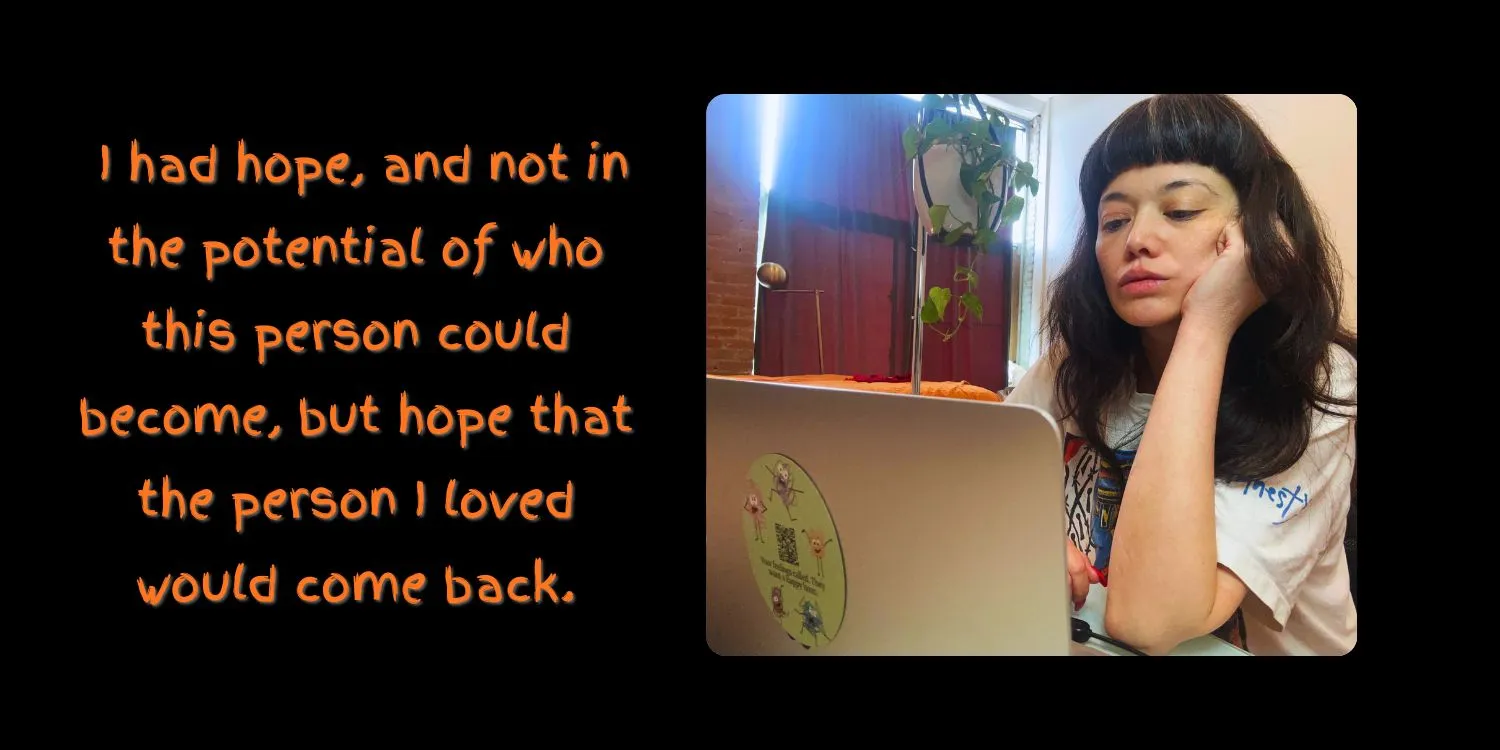
I wanted to continue the conversation and told ChatGPT about another situation, the events leading up to many explosive fights. I remember rationalizing staying in the relationship because the good outweighed the bad. I had hope, and not in the potential of who this person could become, but hope that the person I loved would come back.
I tried asserting a boundary today. It's been three weeks and his friend, AKA literal dude on couch still hasn't found his own place to live and doesn't seem to be in any hurry to GTFO. I've never seen my boyfriend drink this much alcohol before. It's like he's gone.
Our studios were in the same apartment complex, so he occasionally storms into mine like I’m supposed to be amused by his presence. Shortly after, he'd disappear back to his place to hang out with his friend. They’re both full-blown alcoholics, in case I didn't mention this earlier. Met in rehab, both relapsed, and now under one roof.
Maybe that’s why he's been avoiding my spot more and more each day. He knows I don't drink between the hours of 10 a.m. and 9 p.m.
I haven’t seen him work on anything in three weeks. And anytime I bring up that this behavior isn’t okay with me, mainly things like disappearing for two hours when we had dinner plans isn’t okay, he explodes. He yells, flips the conversation around, and refuses to take accountability.
Tonight he was actually kind for longer than 20 minutes.
I pinched something in my back and was in a lot of pain. Without question, he helped massage it out and volunteered to run to the store to grab pain medicine. The store is five minutes away.
I watched him walk past my window on the way back.
Three minutes later he still wasn’t at my place. I gave him the benefit of the doubt. Maybe the store was closed and he ran to another one.
15 minutes. No boyfriend. No text. No call.
25 minutes. Still nothing.
40 minutes later I walked to his room.
He was in there. Apparently talking to his friend. Or drinking. Probably both.
When I asked where he'd been and why it took so long, he said he already got the medicine and didn’t see what the problem was. He just went to his room first and ended up talking to dude on couch about something 'important'.
I was furious. I was in pain. Nothing was communicated. Clearly alcohol and this friendship took precedence over finishing helping his girlfriend.
Am I being crazy? Because this behavior feels incredibly messed up.
The response didn’t focus on the errand itself so much as the pattern around it.
Healthy conflict in relationships usually follows a kind of repair cycle. Something happens that hurts or frustrates one person. They bring it up. The other person may feel defensive at first, but eventually they acknowledge the impact, and both people adjust something going forward.
When the response is complete defensiveness every time, that repair process never really happens. Instead of trying to understand the concern, the conversation becomes about protecting themselves. According to the explanation, that defensiveness often shows up in predictable ways: minimizing the problem, turning the conversation around, justifying the behavior, escalating the argument with anger, or refusing to acknowledge the impact on the other person.
Alcohol tends to amplify those reactions. It lowers impulse control and makes criticism feel more threatening, which can make someone quicker to argue, deflect, or shut down accountability.
The most telling line in my message was one I wrote without thinking:
“It’s like he’s gone.”
ChatGPT explained that partners of heavy drinkers say that a lot. It’s not just the drinking itself, but the sense that the reliable, emotionally present version of the person temporarily disappears. Even if they seem cheerful or social, their attention narrows and they become less responsive to the emotional needs of the people around them.
For the sober partner, or in my case the more sober partner, that can create a strange kind of disconnection. You’re technically interacting with the same person, but the conversation stops feeling reciprocal. It starts to feel like you’re orbiting their experience instead of sharing it.
My frustration about the medicine itself wasn’t unreasonable.
When someone volunteers to help a partner who is in pain, most people would expect them to finish that task before getting distracted by something else.
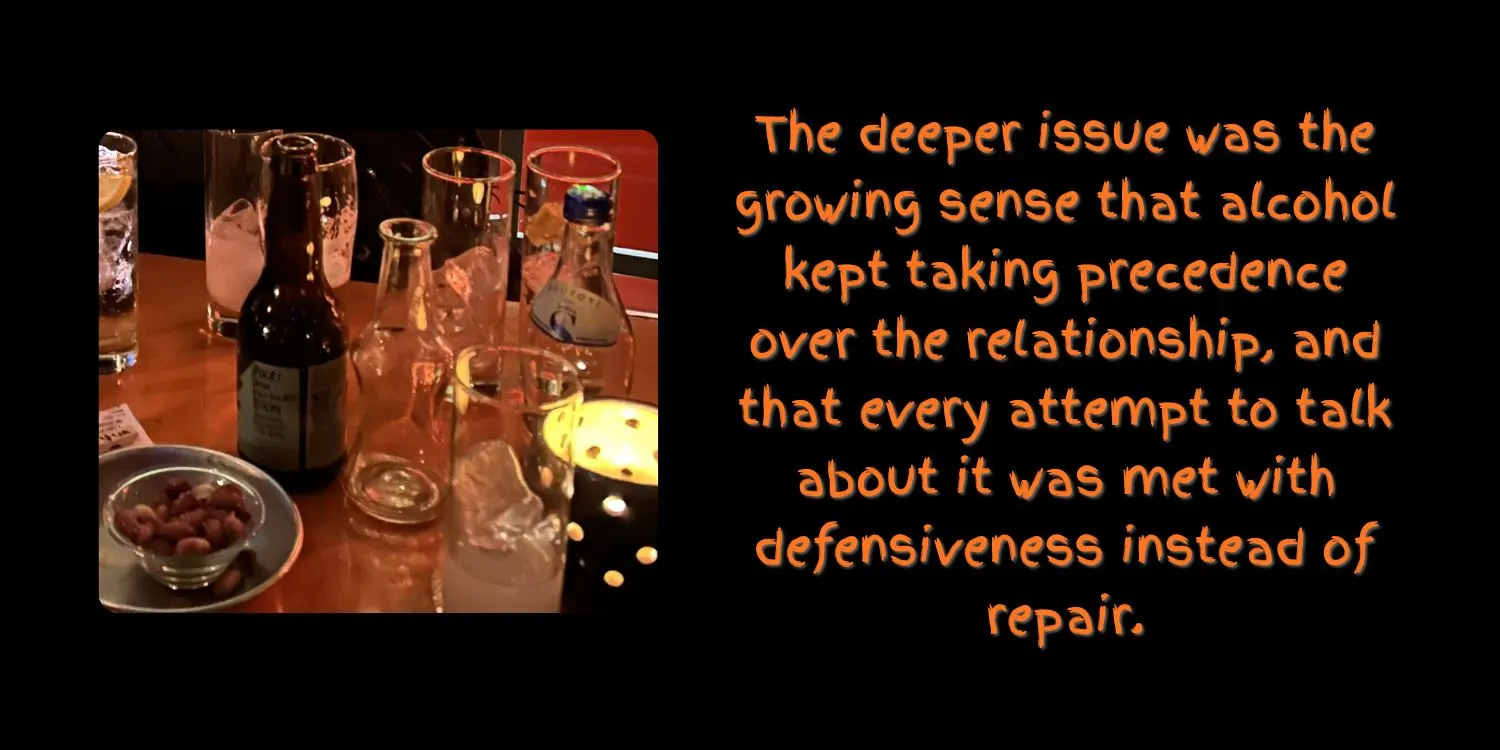
So the deeper issue wasn’t the errand. It was the growing sense that alcohol kept taking precedence over the relationship, and that every attempt to talk about it was met with defensiveness instead of repair.
Situations that might have taken me weeks in therapy to dissect took only a few days with ChatGPT (yes, there were way more situations up for analysis). I'm annoyingly self-aware and generally in touch with how I feel. I also obsess and replay situations in my head when a resolution isn't in sight. I knew I wouldn't be able to fix my relationship overnight. But I did get an explanation, which was enough to quell my restless heart, at least for that moment.
Now the other issue: why didn't I go to my friends for support?
I want to clearly point out that I spoke to friends while in that relationship. They listened graciously, supported me when things got hard, and all gave me the same advice.
“LEAVE.”
“You're too good for this.”
“He'll never change.”
“Alcohol will always win.”
The voices in my head agreed.
Too bad they weren't the ones I was listening to.
After months of pain, I stopped leaning on my friends because I was embarrassed. I knew better than this. I was too old to be in a volatile relationship where chaos took the reins and pulled us straight off a cliff. I already had one of those when I was twenty.
I also didn't want to punish them with variations of the same story over and over and over again. They didn’t deserve to live in that loop with me. Maybe it wasn't the healthiest outlook, but at the time it felt honest.
Having a resource like ChatGPT helped me validate my experience without feeling like a burden. Aside from explaining behavior common in alcoholics, it also helped me protect my peace. Many a sleepless night, I would consult the robot and learn how to disengage from fights and circular conversations, not just in that relationship but in others that came later. It also gave me actionable steps to calm myself during moments of peak agitation. History has a way of repeating itself; being able to recognize the patterns gave me a way out.
As someone who wants to solve problems right away, one piece of advice it gave me still hits hard: put the phone down, stop chasing, and deal with it when you're both calm and regulated.
Do I have concerns about humans becoming overly reliant on artificial intelligence? Absolutely. For one, human well-being should matter more than corporate leaders looking for ways to cut labor costs.
I don’t think ChatGPT is a substitute for therapists, nor do I believe it’s a substitute for the support a real friend provides: a hug, a home-cooked meal, an actual joke. But I do believe it serves a purpose.
In moments of crisis, it kept me from spiraling. It listened to my stories without judgment and was available 24/7. For that I am grateful, not because it replaced the humans in my life, but because in moments when I felt alone it gave me somewhere to put the questions I didn’t know how to ask out loud.
Ready to unpack your emotions with people who get it?
👉 Check out our Love and Emotions Spaces.