

A guide to BetterHelp Group Therapy and Totem Spaces’ boutique approach to online community.
Something big is happening in mental health care, and it isn’t in a clinic or on a couch. It’s on our screens, in our living rooms, and across time zones. Digital therapy has broken out of the therapist’s office and grown into something new: communities where people connect, heal, and grow together.
As our world becomes more connected yet, ironically, more isolating, a new generation of digital healing spaces is stepping up to fill the gaps that conventional online therapy has missed. Two approaches are leading the way: the intentionally intimate, niche communities we’ve built at Totem.org, and the large-scale BetterHelp group therapy model. Exploring both reveals not only where digital mental health is headed, but also what people truly need to feel supported, understood, and empowered on their healing journeys.
Why Digital Healing Communities Like Totem Spaces and BetterHelp Group Therapy Are Growing
The pandemic made virtual therapy mainstream and changed the way we think about mental health support. Platforms like BetterHelp group therapy opened the door to professional help for millions, but they also revealed what was missing: the deeper sense of community that comes from being truly seen and understood by people who share your struggles.
At Totem, we’ve learned that real healing often happens in the small moments in between—the nod of recognition when someone shares your story, the quiet relief of realizing you’re not the only one carrying a fear. That kind of connection can be hard to find in larger group models, yet it’s exactly what so many people are searching for.
Totem Spaces: The Boutique Community Approach
Totem Spaces is a new kind of digital healing community that chooses depth over breadth. We don’t believe in one-size-fits-all mental health services. Instead, we curate Spaces for specific groups, like mothers looking for support, LGBTQIA+ individuals seeking affirming connection, and people focused on personal growth.
What sets Totem apart is intimacy by design. Members can drop into open groups when they need flexibility, or commit to multi-week series built for deeper connection. In our six-week series, the same cohort explores a set of related topics together, building trust, familiarity, and comfort along the way.
When Totem Spaces Is the Right Fit
Identity-Specific Healing
If you thrive in spaces where your identity is seen and respected, Totem Spaces offers groups built around shared lived experiences. Whether you’re a mother seeking connection, part of the LGBTQIA+ community, or exploring self-improvement, you’ll find conversations that speak directly to your journey. In our Spaces, your story doesn’t need extra explanation; everyone already understands the context you’re coming from.
Life Transitions and Finding Your People
Major changes such as a cross-country move, a career shift, or becoming a caregiver can feel isolating. Our groups are designed to help you find grounding and community. You’ll connect with others in similar stages, share strategies, and feel less alone as you step into a new chapter.
Depth on a Specific Challenge
Some experiences are best explored in a structured arc. Our topic-based Series—such as “What Is Love” and “Self-Sabotage”—guide participants through interconnected themes over six weeks. Each week builds on the last, creating a sense of progress and shared growth.
For People Who Crave a Safe Space to Open Up
Some conversations require trust just to begin. Totem Spaces provides a judgment-free environment where you can share openly, knowing you’ll be met with understanding. The structure and facilitation of our groups encourage meaningful dialogue so you can work through what matters most to you.
Shaping the Conversation
Your voice matters here. If there’s a subject you’d like to see addressed, you can bring it to us. We regularly create new groups based on member input, ensuring our spaces evolve to meet the needs of the community. You’ll always know there’s a place for the conversations that matter most to you.
BetterHelp Group Therapy: How It Works, What to Expect, and Key Differences
BetterHelp group therapy (sometimes called “Groupinars” or “Classes” on the platform) is included with every subscription at no extra cost.
Sessions run about 90 minutes and are led by licensed therapists, with groups typically range from 5 to 18 participants. The larger size allows for more perspectives, though it can feel less personal than smaller cohorts.
BetterHelp group therapy covers clinical themes like trauma recovery, substance use support, eating disorders, and caregiving burnout, presenting a type of therapeutic support that complements Totem’s deeper, identity-specific communities.
The strengths of BetterHelp group therapy are accessibility and variety. You can log in from anywhere, pick a time that works for you, and choose from dozens of topics. For many people, that flexibility is invaluable. The trade-off is that larger, rotating groups often feel less personal. Totem, by contrast, is built for intimacy with smaller groups, shared lived experiences, and spaces where it is easier to feel seen and understood. And unlike BetterHelp, Totem Spaces are free to join, making them accessible to anyone seeking connection and support.
 ,
,
The Psychology Behind Community Healing
Both Totem Spaces and BetterHelp group therapy work because they meet needs that individual therapy sometimes can’t. Humans are social by nature, yet many of our mental health struggles come from feeling isolated, ashamed, or convinced that no one else could understand what we’re going through.
Psychologists like Irvin Yalom, author of The Theory and Practice of Group Psychotherapy, describe “universality” as one of the most healing forces in group work—the powerful realization that others share similar struggles. This recognition reduces shame, encourages vulnerability, and provides hope. Research in neuroscience backs this up: our brains are wired for co-regulation, the steadying of our nervous systems through safe and supportive connection with others.
User Preferences: What People Are Really Looking For
More and more people, especially younger generations, want mental health support that feels honest and human, not distant or clinical.
For some, Totem Spaces offers exactly that. Smaller, intentional groups built on shared experiences and trust create a strong sense of belonging. Others may prefer the broader reach of BetterHelp group therapy, which provides a wide range of clinically led sessions and flexible scheduling for those who prioritize accessibility and professional structure.
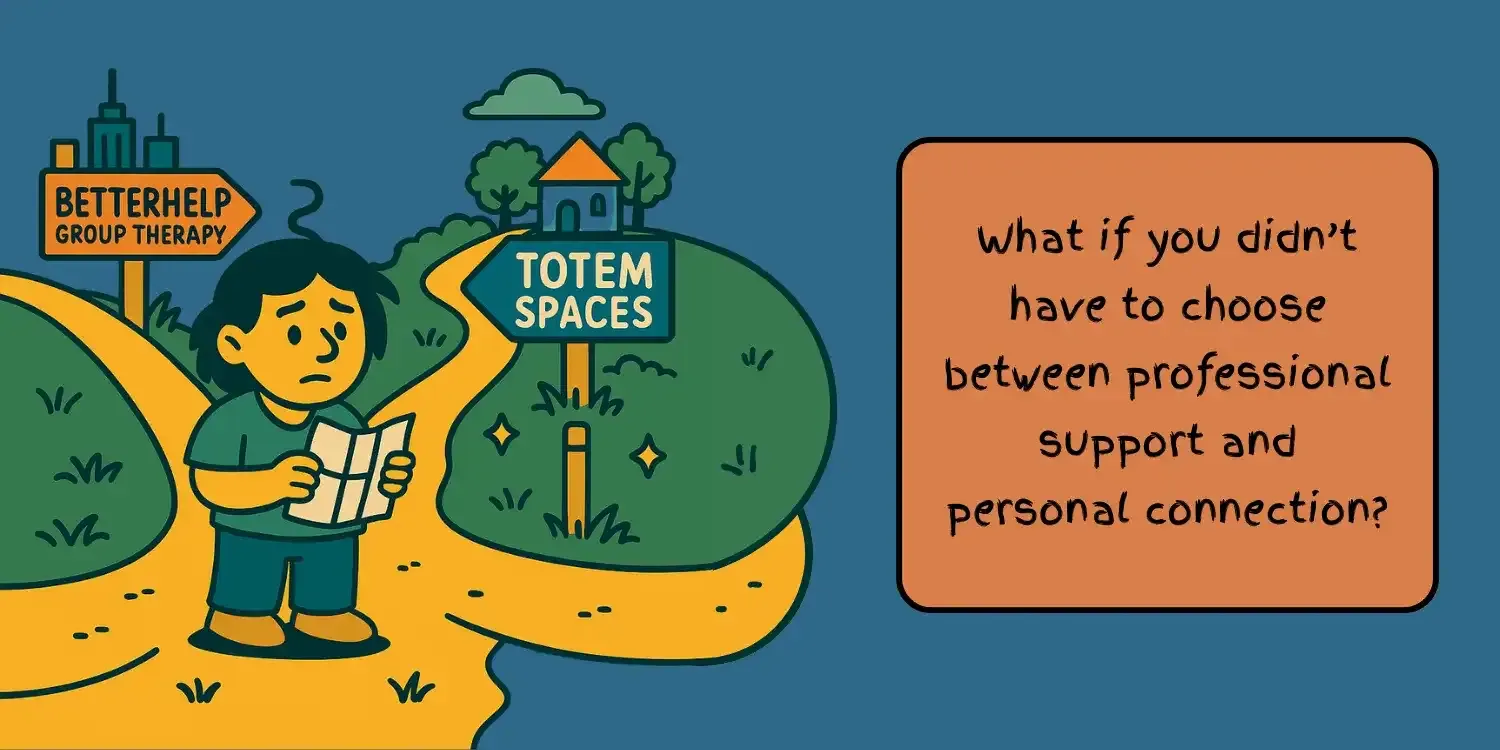
Ultimately, the right choice depends on the kind of support you value most: a personalized, community-first environment or a larger scale, professional-led experience.
Choosing Between Totem Spaces and BetterHelp Group Therapy
The choice often comes down to the kind of support that feels right for you.
Choose BetterHelp group therapy if you want a clinical, therapist-led approach with structured sessions and a wide range of mental health topics.
Choose Totem Spaces if you’re drawn to smaller groups, identity-focused conversations, and the warmth of a community that grows together over time.
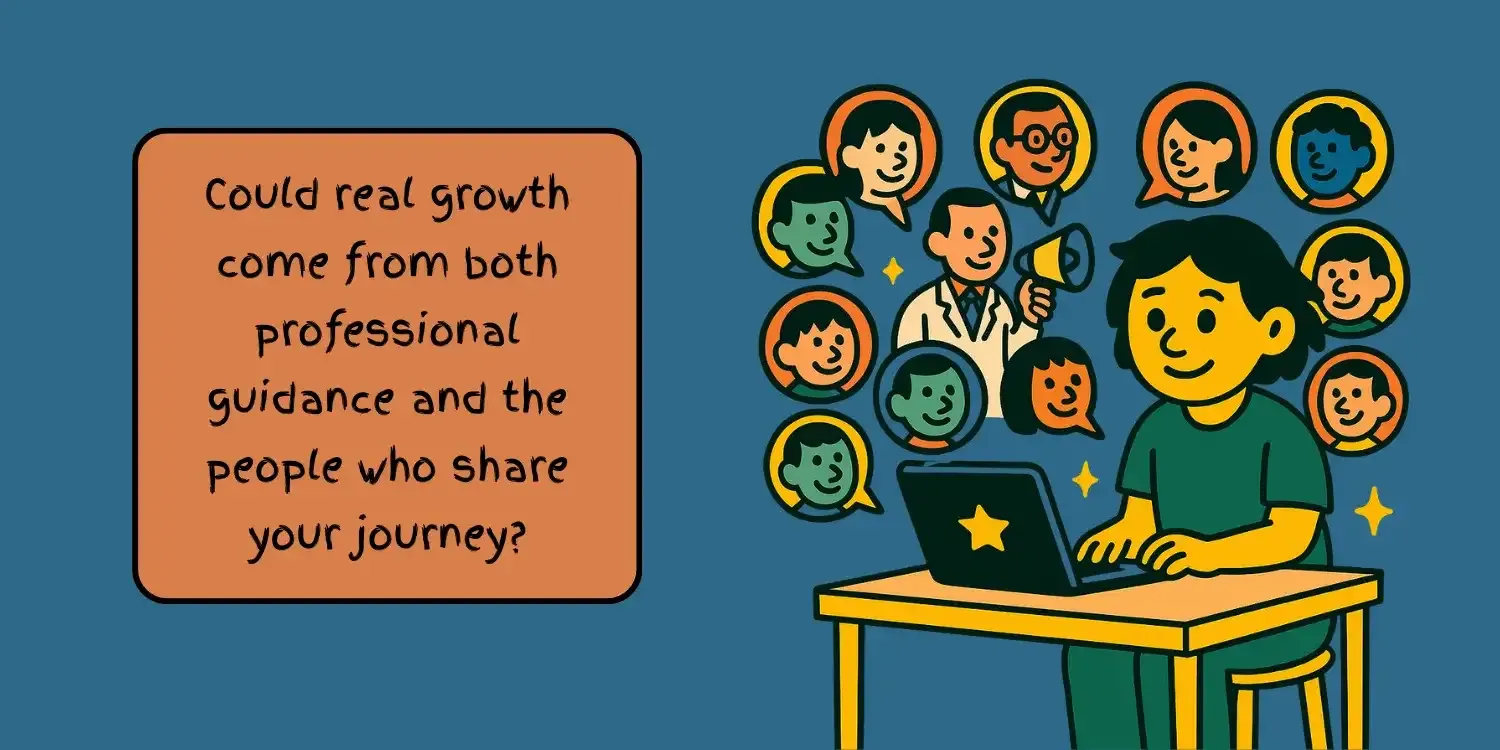
Many people find value in both, turning to BetterHelp for professional structure and to Totem for the deeper, personal healing that happens when you find your people.
The Broader Shift in Mental Health Care
The rise of platforms like Totem Spaces and BetterHelp group therapy reflects a cultural recognition that mental health thrives in connection. Technology is no longer just a way to access therapy, it is a tool to build relationships that support lasting healing and to help you find the people who will walk beside you on the journey.
👉 What Next?
✅ Feeling stuck? Try this:
Drop into a Totem Space. It's free!